
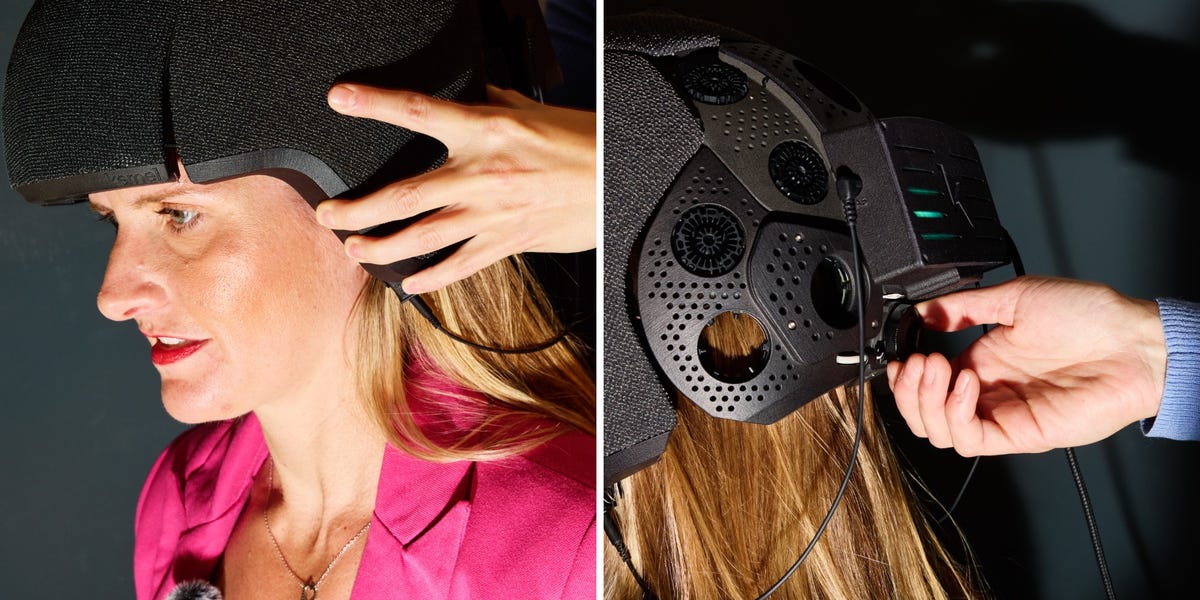
I’m sitting in a small, dark room with my head wedged inside a very heavy helmet. It’s surprisingly comfortable, considering its 5.5-pound weight, with dozens of plastic circles that look like little bedazzled lightbulb sockets gently burrowing through my hair and onto my scalp. Here I am, ready to measure my brain fitness.
I’m taking two exams at the brain-measuring startup Kernel in Los Angeles. There’s no great way to prepare for these tests, making the experience both nerve-racking and oddly relaxing. Nothing to do now but sit back and let the brain helmet probe the inner workings of my mind.
Before he was that guy doing all the wildest things for longevity, tech entrepreneur Bryan Johnson started this headgear company in 2016. Initially, the goal was futuristic: he wanted to build brain-interfacing chips like those Elon Musk has developed at Neuralink, and then bridge human consciousness with computers and AI.
As time went on, though, and Johnson began exploring every minute way he could track and hack his health, measuring nighttime erections and analyzing routine blood work, he realized his mind was the one area of the body that was nearly impossible to accurately monitor for longevity.

Maggie Shannon for BI
For the past decade, Johnson has poured more than $60 million of his own cash into this brain-scanning company, all with the goal of making brain health and cognitive performance as measurable as any other “biological age.”
After 10 years of development, and more than $150 million invested overall, you can now try out “Kernel Flow” at a half dozen longevity-focused clinics across the US.
While I left Kernel’s leafy offices feeling assured by my test results, I was filled with new questions about how this technology will evolve, and who it might benefit.
Kernel’s technology is impressive, academic brain researchers told me. It’s a system called time-domain functional near-infrared spectroscopy (TD-fNIRS), which gathers data from 40 optical modules that operate like a pulse oximeter for your mind, using light to measure oxygen in the brain. They pair this with EEG data, or records of the brain’s electrical activity, to get a more complete picture of what’s going on inside a person’s head.
“We combine the oxygen maps with the electrical signals and get this kind of unique perspective that almost no one in the world has on how the brain is functioning at any given point in time,” Kernel CEO and electrical engineer Ryan Field said.
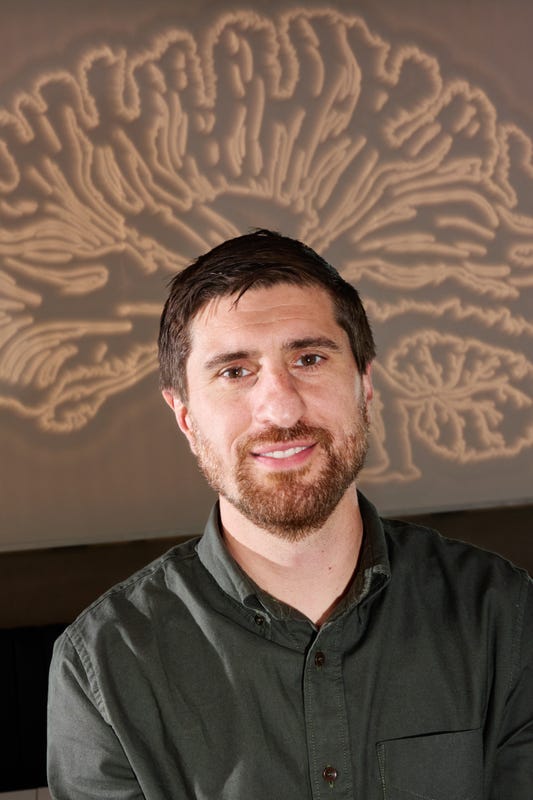
Kernel CEO Ryan Field, who calls himself a “hardcore” electrical engineer, used to design sensors for self-driving cars.
Maggie Shannon for BI
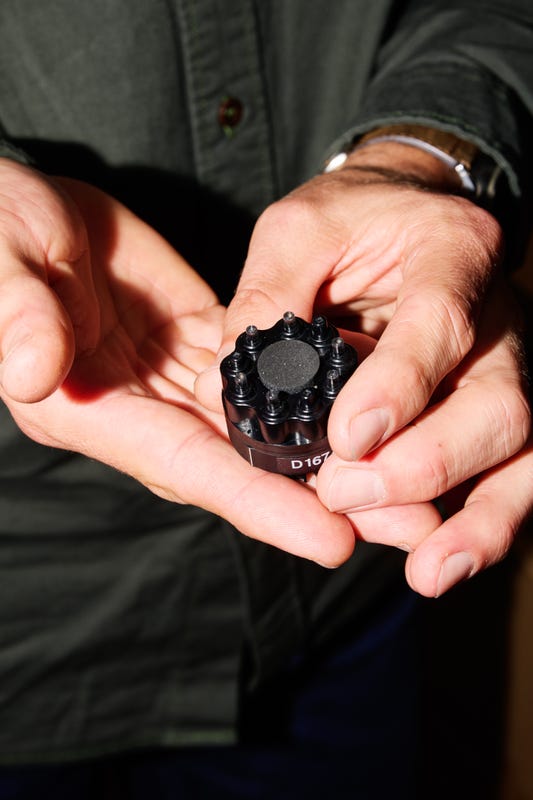
Each module works like a pulse oximeter for the brain, measuring oxygen flow.
Maggie Shannon for BI
Eventually, Kernel hopes to be like an Apple Watch for the mind, monitoring brains for early signs of cognitive decline and providing real-time guidance on brain performance, much like a step count or a sleep score would.
Johnson said, ideally, the tech could improve the way depression is treated and help us understand how our brains react in real time to stimuli like alcohol and ketamine. For now, the headset is not FDA-approved to diagnose or treat anything, but is being used at half a dozen longevity clinics nationwide as an add-on service to help clients monitor how well their brains are aging.
At $117,200 a pop, this headset isn’t exactly a consumer device. Instead, Kernel is accessible to longevity enthusiasts at select clinics, and the company says that more than 30 commercial product developers and academic labs have also bought the tech.
I underwent Kernel’s two commercial brain tests: a 7-minute scan meant to measure brain aging and a 30-minute cognitive test that measures core brain skills, including focus, planning, self-control, memory, and hand-eye coordination.
My results were reassuring, and also kind of boring. Kernel told me my brain acts its age (cool) and that my cognitive functioning is above average: I am roughly at the 75th percentile.
The test scored me highest in “complex attention,” meaning I was good at channeling focus and switching tasks (85th percentile), and not too shabby at “learning and memory” (75th percentile).
My worst score was in “language” (60th percentile) — not exactly an encouraging finding for someone who makes a living with words, but still a fine score for my “word retrieval” and comprehension. This was assessed through a test with timed prompts like: “Name every fruit you can think of” or “Name words that start with the letter J.” Somehow, under the time pressure, I could only think of three “J” words.

Maggie Shannon for BI
I’m not exactly sure how much stock to put into my score.
Neuroimaging expert Theodore Huppert, who runs a lab at Stony Brook University dedicated to analyzing fNIRS data, said middle-aged brains all look kinda the same anyway.
Like so many wearables, what’s useful is being able to monitor your own trends over time, tracking improvement or decline. If you’re 40 and your brain looks like it’s 80, that’s a problem. Similarly, if my brain ages six years in the span of six months, especially if I’m exhibiting any unusual memory or behavior changes, I may want to seek help from a doctor.
“I think right now there’s just not enough data,” Boston University professor of neurophotonics David Boas, who’s been working in the field of fNIRS brain scanning technology for more than 30 years, said.
Boas estimates that it will take a decade, if not longer, for all the information Kernel is gathering to really generate meaningful, actionable data that can be used to improve brain health outcomes. For now, it’s just a fun “plus” for data-hungry consumers and longevity biohackers like Johnson, who used the helmet to track brain changes when he drank alcohol and took magic mushrooms.
“A lot of consumers are willing to pay for that data just so they can follow it themselves,” Boas said. “I mean, look, I have an Oura Ring. I have an Apple Watch. I love the data. Is it helping me clinically? Probably not, but I love following the data, and it kind of changes the way I behave.”
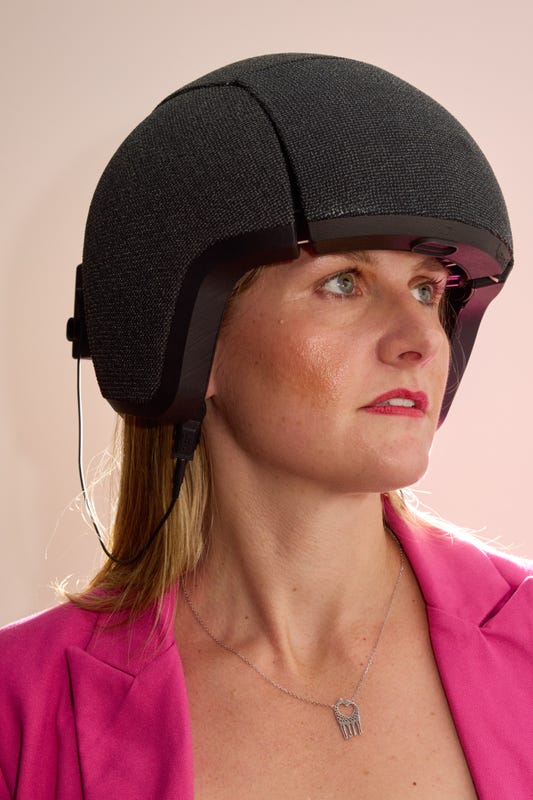
My brain was “better than average,” according to Kernel’s test.
Maggie Shannon for BI
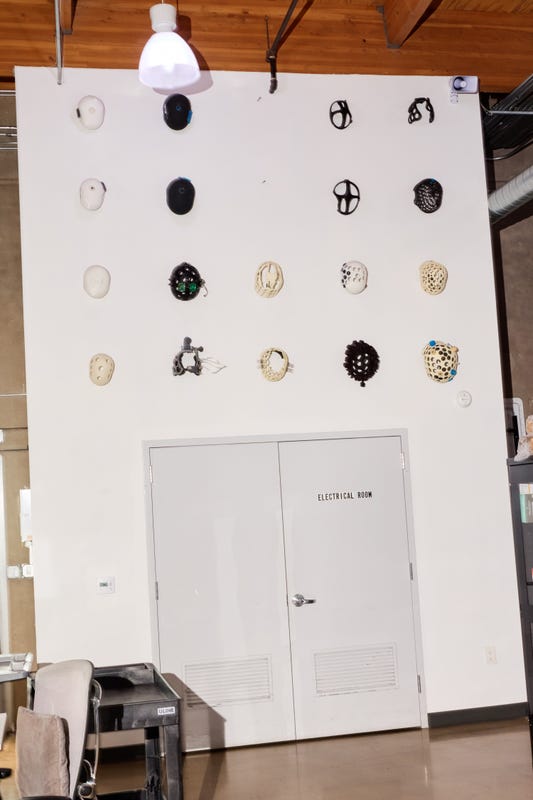
The company has been developing brain headsets for 10 years and sells to longevity clinics, academic labs, and private businesses.
Maggie Shannon for BI
From a researcher’s standpoint, it’s a fun way to nerd out. “The technology hardware is just beautiful,” Boas said, who bought three of Kernel’s modules ($15,600) to get a leg up in his own research.
“They do these laser pulses, and they resolve how long it takes photons to travel through the head,” he added. “It just gives them much more information than what I and the majority of my colleagues get.”

Maggie Shannon for BI
In the future, I can imagine this headset being useful for mental health and dementia care. Instead of just filling out a pen-and-paper Alzheimer’s test, why not see what’s happening inside your head at the same time, pairing brain information with your cognitive score?
Already, some clinics around the world are using brain scans, voice recognition, and gaze tracking to help diagnose cognitive decline. Boas said fNIRS could one day soon help treat other conditions like ADHD or obsessive-compulsive disorder, providing “immediate feedback” during cognitive behavioral therapy sessions, for instance.
Kernel is also researching how the tech might help better match patients to the best depression treatment for them, whether it be magnetic stimulation, ketamine therapy, or something else.
But in the wrong hands, it isn’t hard to imagine how this all goes very, very wrong.

Maggie Shannon for BI
Getting spooky about it, companies could harness this data to prey on how each of our unique brains interacts with and reacts to the world. Meta seriously considered building fNIRS into its Oculus headsets to record brain activity as people navigate the metaverse.
“It can be a little bit scary. Even if they don’t fully understand the brain signals, they can still harness them to prey on people,” Huppert said. “I’m glad we don’t actually have the ability to do that yet.”
A new study Huppert pointed to released in May showed how fNIRS technology could be used to directly gauge consumer preferences for Coke and potato chips, using brain data rather than surveys.
Ben Hamley, the global head of R&D at real estate company JLL, said devices like Kernel’s Flow can be great new ways to track our own “neurofitness” and measure brain health, as long as patient privacy is kept at a premium.
“No one wants to be sat in a brain scanner and observed,” he said. “Especially in the context of work, no one wants to ever feel like their mental privacy is invaded.”
At Kernel, researchers, who are well aware that their system needs lots more training data, are asking volunteers to come in and watch Netflix while wearing the Flow headset, to better understand brain activity patterns. What does our brain look like when we’re happy, sad, or scared by what we see on our screens? For research purposes only, of course.
“We’re not going to try and control your brain. We want you to control your brain,” Kernel’s CEO, Field, said. “It’s really about trying to give individuals agency and the information to make decisions so that they can better care for their brain.”