



NFTs and the Metaverse have evolved into significant tools for achieving brand goals and new sources of revenue, and this is just the start of the journey.
While the influence of this blockchain innovation on society has yet to be fully realized, in the Metaverse, NFTs remain a force for growth; and with the numerous innovations permeating the ecosystem, it’s bound to get even better.
Truly, the Metaverse has the potential to spark unrivaled creativity in several sectors, with a very low entry barrier making it accessible to a wide range of income levels across the globe.
The development of Metaverse-NFTs may be the most critical thing in recent times in the blockchain ecosystem, and it is significant in the broader context of how users will interact in this environment. Blockchain gaming using NFTs has grown by 50% in the last year even during the current downturn!
How do NFTs relate to the Metaverse?
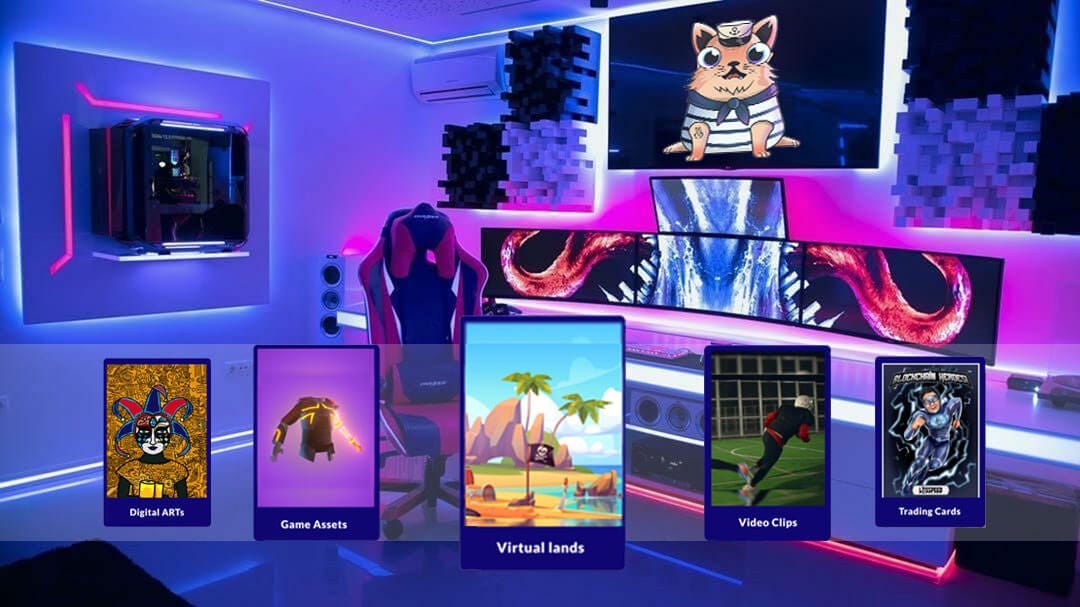
NFTs are a new class of digital assets; issued, tracked, and exchanged using blockchain technology.
NFTs are built on these significant properties, they are decentralized networks, distributed ledgers, and smart contracts. This allows assets of value to be represented in a completely new way.
Since NFTs are digital assets, they can be held as a store of value, as a payment method, and as a means of exchange. Furthermore, they are unique tokens and serve as digital proof storing all relevant information about an entity on the blockchain.
Through NFTs, real-world items can be tokenized and exist in a virtual environment. This use case is significant in the existence of the Metaverse.
Meanwhile, the Metaverse is a virtual global space focused on social connection facilitated by virtual and augmented reality headsets as well as mobile devices. The Metaverse also refers to the underlying blockchain technology which powers the NFT-based economy, and it allows for the creation of unique digital assets (NFTs).
There are strong interconnections between NFTs and Metaverse, particularly in blockchain gaming and other compatible areas where they serve as value bearers for large-scale digital social media. People can display digital forms of art and property in the Metaverse, and NFTs will promote transparency and integrity of financial transactions as well as conferring ownership, allowing entry, and providing proof of attendance to IRL and Metaverse events.
Commercial effects of NFTs in the Metaverse
Innovation in the Metaverse ecosystem is rapidly developing, and there are increased dynamic activities with a broad scale of influence. Nevertheless, a lot of potentials of the Metaverse remain untapped.
Non-fungible tokens (NFTs) have evolved as a base for the Metaverses internal architecture and economic growth. People use NFTs to buy virtual parcels of land, event tickets, art, avatars, and other digital products in the Metaverse.
Furthermore, consumers and businesses transfer essential human services and assets into the Metaverse. For example, blockchain-based gaming models allow for the empowerment of the users while trading in-game purchases, and this game model is only one technique that connects and empowers participants. Players can participate in these economic in-game capital markets in the Metaverse using NFTs.
They may also earn value while playing by earning reward points for the value they bring to the table. Such games are ideal for the virtual space since users own 100% of their properties rather than being regulated by a single game entity as in most traditional games. And with the advent of NFT portability across platforms like SPACE, Sandbox and others whole new levels of value are unlocked for NFT holders.
Similarly, virtual worlds imply many virtual real estates, and NFTs are being used to take ownership of these environments in the Metaverse. Users can also establish ownership of virtual structures while also carrying out other day-to-day functions in the Metaverse.
Selling virtual land for profit is one of the primary use cases of such enterprises. In addition to creating other structures such as online shops or holding events, you may lease land for passive income.
Currently, numerous brands and prominent organizations across the globe are creating virtual identities intending to maximize the current trend in the blockchain ecosystem and be pioneers in the Metaverse.
Fashion brands such as Ralph Lauren are trailblazers in this regard. Recently, the prominent fashion brand opened its newest stores in the online World of Roblox, with 47 million daily active users. The virtual stores are open 24/7 and accessible to anyone in the World in just a few clicks. In addition, Adidas, Armani, and Calvin Klein have also experimented with digital fashion at various points in time.
This innovation enables consumers and brands to form bonds, and brands discover what kinds of content, aesthetics, styles, and collaborations that thrill the community best.
SPACE Metaverse: Bringing it all together

SPACE as a Metaverse platform has been designed to help maximize all that is achievable in the Metaverse socially and most importantly, commercially. SPACE Metaverse offers a 3D world designed to power your creativity and possesses an amazing artistic resemblance to real-world structures with immersive commerce components, where you define your character, interact with activities and individuals of your choice.
We are a home to all, a commerce-focused Metaverse that allows users to trade and earn while supporting their business goals and aspirations. It definitely doesn’t get better than this and this is just the beginning.
Indeed, SPACE Metaverse is paving the way for a people-focused, and commerce-centered, walkable internet. In other words; The Metaverse.
About Space
SPACE is a metaverse catering to the arts and commerce and aiming to provide powerful builder tools that allow users to design and create immersive commerce spaces without barriers. It acts as the glue to the various metaverses, bridging the many virtual worlds into one trading hub. We are focused on creating a vibrant user-owned economy through unifying knowledge, joint effort and fair rewards distribution based on a culture of collaboration and economic opportunities.