
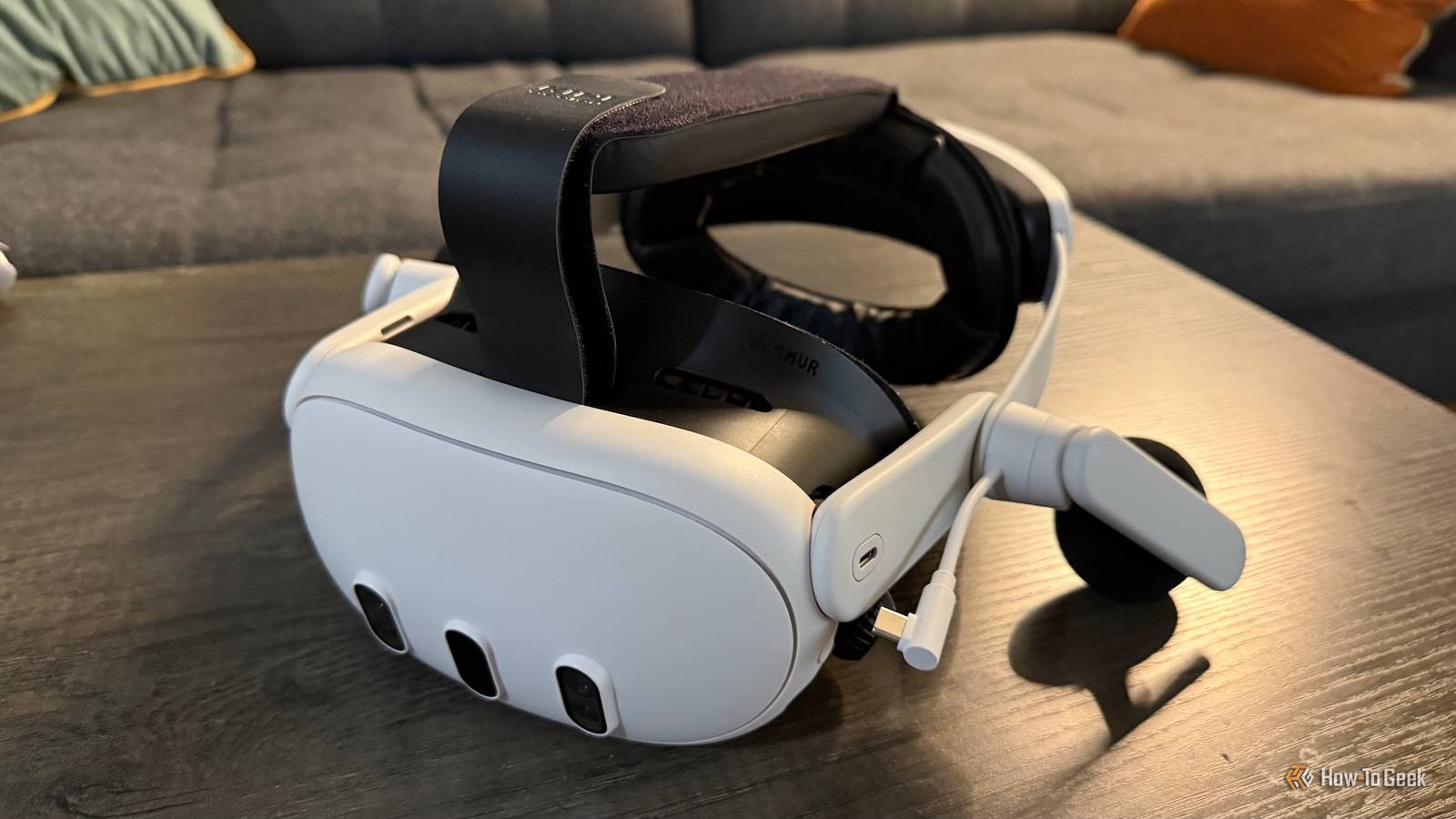
Meta previously announced plans to develop VR and XR headsets with ASUS and Lenovo, using the same software as Meta’s own Quest headsets. Those plans are now cancelled, but the headsets could be reworked as Android XR hardware.
HTG Wrapped 2025: 24 days of tech
24 days of our favorite hardware, gadgets, and tech
Meta currently sells the Quest 3 and Quest 3S headsets, which are by far the most popular options for virtual reality and augmented reality software, including VR gaming. The company had grand plans to license the Quest’s software platform, renamed to Meta Horizon OS, for use in third-party headsets. Basically, Horizon OS would be the Android or Windows of VR headsets—one operating system and software ecosystem for many companies’ products.
The company said in its initial announcement, “Meta Horizon OS is the result of a decade of work by Meta to build a next-generation computing platform. To pioneer standalone headsets, we developed technologies like inside-out tracking, and for more natural interaction systems and social presence, we developed eye, face, hand, and body tracking. For mixed reality, we built a full stack of technologies for blending the digital and physical worlds, including high-resolution Passthrough, Scene Understanding, and Spatial Anchors.”
ASUS and Lenovo were the only companies mentioned as partners for the new program. Lenovo was supposedly working on “mixed reality devices for productivity, learning, and entertainment,” and ASUS was building a “performance gaming headset.” No further details about those products, or even new photos, were ever revealed.
Those plans are now fully cancelled. In a statement to Road to VR, the company said, ” We have paused the program to focus on building the world-class first-party hardware and software needed to advance the VR market. We’re committed to this for the long term and will revisit opportunities for 3rd-party device partnerships as the category evolves.”
The news isn’t entirely surprising. At the time, the Apple Vision Pro was only a month old, and companies like ASUS and Lenovo likely wanted a competing product without building new software and ecosystems from scratch. The Vision Pro turned out to be a market failure, which may have dissolved any interest in building similar headsets at other tech companies. Meta is also reportedly planning cuts and mass layoffs for its metaverse division, which includes Quest headsets and software.
This VR headset was a better investment than my computer monitor
This is the most I’ve enjoyed working at a desk.
Google, Samsung, and Qualcomm have also been preparing Android XR, which serves the same purpose as Horizon OS, but with the added benefit of running Android apps from the Google Play Store and (eventual) support for AR glasses. The first Android XR headset was released in October, the Samsung Galaxy XR, and the software experience seems to be more refined than Meta’s attempts.
Android XR doesn’t yet have the massive game library of Quest headsets, but it could get there with enough time, and Android XR was also built with third-party hardware in mind. In theory, ASUS and Lenovo could rework their headsets to use Android XR, but neither company has confirmed that.
The Galaxy XR costs a staggering $1,800 before you add controllers and other accessories, and the Quest 3S is as low as $250 on sale. I would love to see more Android XR hardware closer in price to Quest headsets, whether that’s from ASUS, Lenovo, or someone else, especially now that Horizon OS is off the table.
Source: Road to VR via TechCrunch