
Demand for immersive experiences is growing in virtually every industry. Currently, the extended reality (XR) market is growing at a phenomenal CAGR of 48.3%, as innovative companies continue to uncover the benefits of unique, virtual landscapes.
In recent years, more business-focused use cases for XR have begun to emerge. We now see VR (Virtual Reality) AR (Augmented Reality) and MR (Mixed Reality) as more than just avenues for entertainment. These unique tools can also enable collaboration, inspire creativity, enhance training, and unlock new landscapes for businesses to explore.
In such a fast-moving landscape, it’s difficult to know for certain what the future of XR might bring. However, there are some key trends which are beginning to appear within the industry. Here are some of the most valuable trends worth exploring in 2023.
1. Virtual Avatars, Lives, and Identities
Conversations about “digital identity” have been ramping up rapidly in the last couple of years, as we spend more of our lives working and communicating online. Our “digital identities” are becoming just as important as our physical identities, influencing how we interact with others, and present ourselves in the virtual world. As a result, XR innovators are beginning to look at new ways to help people “recreate” themselves in the digital sphere.
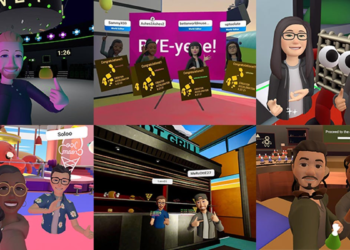
Already, innovators like Microsoft and Meta have begun leveraging intelligent tools to help users create photo-realistic avatars they can use in virtual environments with VR headsets. These avatars could be crucial to helping people to connect in a digital landscape, facilitating more human experiences, based around a shared sense of presence.
As homes, workplaces, and other experiences continue to be built in the impending “metaverse”, the demand for ever-more realistic virtualizations will grow. One day, looking at an avatar version of ourselves could feel just like looking in a mirror.
2. The Metaverse, and Meta Experiences
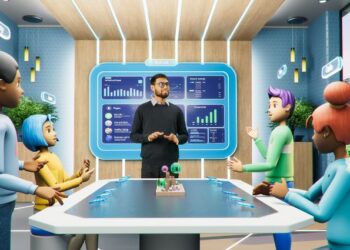
The metaverse is perhaps one of the most talked-about trends in the XR landscape to date. While some specialists are still trying to get their head around what the metaverse will actually look like, most agree it will be an interconnected ecosystem of “digital experiences”. Essentially, the metaverse will be a decentralised environment where people can communicate, work, and engage with others.
Though XR technology isn’t a necessity in the metaverse, it’s likely to be a core part of how we experience this new virtual world. With the right headsets and devices, people can immerse themselves in unique virtual environments like never before, and interact with others in spaces which look and feel similar to real life.
The metaverse will also demand a rapid uptick in the creation of digital assets for the XR environment. We’ve already seen countless brands investing in concepts like NFTs, and digital twins, designed with XR technology. As more big brands continue to invest in the metaverse, there’s no doubt we’ll see an increase in metaverse-related XR innovation.
3. Blockchain in XR Technology
In a world exploring the future of concepts like the “metaverse” for decentralised digital interactions, concepts like the blockchain are also gaining more attention. Although only a handful of technology giants have begun to invest in this landscape, the interest here is growing. Blockchain solutions will allow companies to build more decentralized and secured environments for managing XR assets in the future metaverse. This could be crucial to keeping resources safe and secure.
The blockchain could also be a powerful tool for helping to monitor and police the metaverse in a future world of XR. With blockchain solutions, it’s possible to track the movement of data, and the actions of different users on a consistent basis. Companies like Tencent have already begun to invest heavily in new blockchain initiatives with a specific focus on the metaverse and the rising NFT economy. At the same time, concepts like “blockchain as a service” are gaining more ground.
While it’s difficult to say for certain exactly what role the blockchain might play in the future of extended reality, there’s a good chance we’ll see more businesses getting involved in this landscape in the years to come.
4. Teleportation and Mixed Reality
While Mixed Reality, or “MR” is already a core component of the XR environment today, it’s one of the most underdeveloped aspects of the landscape. There are still people out there who struggle to tell the difference between mixed reality and augmented reality. After all, both solutions are designed to combine the real and digital worlds, to engage and delight users. However, mixed reality holds the potential to unlock endless new virtual experiences.
Thanks to other emerging innovations in the technology space, such as IoT, AI, and even 5G connectivity, MR should be able to continue evolving in the years ahead. Some companies are already imagining a future in “Mixed Reality” where people will be able to essentially teleport virtual versions of themselves into real-world scenarios, in real-time.
We’ve already seen the core elements of this technology in practice, from entertainment and media companies experimenting with holographic images of artists. Through IoT and AI-based connections, it may even be possible for a holographic version of an employee to interact with a device located thousands of miles away, and make changes to how it operates.
5. Edge and Cloud Computing
To pave the way for a new future of XR innovation, companies need more than just the right wearables and software. They also need to be able to leverage the most effective connections. In the past, XR has struggled to deliver truly immersive experiences as a result of limited bandwidth, and connectivity restraints. As we progress towards a future where true-to-life imagery in XR becomes more essential, we’ll need computing systems capable of handling the load.
Fortunately, edge and cloud-based computing solutions are emerging as a potential solution to this problem. Some XR vendors have begun to introduce their own cloud computing infrastructure that companies can use to simplify and streamline the transmission of data. Edge computing solutions for XR technology will also be enhanced by the wider roll out of more advanced mobile connections.
5G technology could allow for the rapid transmission of larger amounts of data to and from hardware in the XR landscape. This could allow for a more cohesive and efficient experience in immersive realities overall.
6. Enhanced Sensors and Tracking
The hardware built into extended reality devices has come a long way in recent years. Newly emerging products like the Meta Quest Pro feature a number of external cameras designed to capture data about a surrounding environment in real-time, to help customise the virtual experiences encountered by customers. Many leading XR vendors are also experimenting with more intelligent tools for eye, face, and hand tracking.
With more enhanced sensors to collect data from users in the moment, XR developers will be able to build far more immersive and realistic experiences. At the same time, these sensors will help to strengthen the way people communicate through XR. Facial tracking tools will be able to convey expressions to users in a collaborative setting, for a more human-feeling interaction.
Motion tracking tools can also be aligned with other innovative concepts in the XR industry, like haptic feedback, to make it feel as though we’re interacting with solid products, rather than digital representations. This could pave the way to better training opportunities, where users can develop genuine muscle memories alongside theoretical skills.
7. Multi-Sensory Experiences
Speaking of haptic feedback, XR solutions in general are becoming more focused on multi-sensory experiences. In the past, the core focus of many XR companies was to increase the visual experience for customers as much as possible. Brands consistently strived to overcome issues with the monitors built into AR, VR, and MR headsets. While visual enhancements and screen updates are still taking place, innovators are also focusing on other senses.
With haptic feedback, developers can leverage our sense of touch to bring us deeper into an immersive environment, and make us feel as though we’re really there. With spatial sound programs, business leaders can adjust the audio we hear based on where we are in a “virtual space” or what we’re doing. Overall, pioneers are beginning to rethink what it really means for someone to be immersed in a different reality.
Going forward, we may see more innovative XR companies experimenting with how they can bring more of our senses into the digital space, so the future “metaverse” can feel just as real to us as any physical environment.
8. Ergonomics and User Experience
One of the key issues that has prevented the widespread adoption of XR solutions for businesses and consumers in the past, is a problematic user experience. Many of the initial VR headsets introduced into the market were heavy, cumbersome, and difficult to wear for long periods of time. Countless people even ended up suffering from “VR sickness”, which prompted them to avoid using XR devices as frequently as they could have.
To create a world where XR is a commonplace solution for work and life, developers and creators need to focus more on the user experience. As a result, many have been making significant strides in the way they produce hardware for the XR space. Many emerging headsets and wearables are becoming more lightweight and ergonomic, with various customisation options to suit different users.
At the same time, upgrades to visual latency and other aspects of the XR experience are beginning to make the virtual space feel less disorienting. Ideally, we’ll one day encounter a future where engaging in an XR meeting, or working for hours in a VR setting no longer feels uncomfortable.
9. New Use Cases for XR
As mentioned above, in the last couple of years, the use cases for the extended reality landscape have evolved at a phenomenal rate. We’ve already begun to discover the benefits of this environment for things like training, education, and even the production of new tools. As extended reality tools become increasingly accessible and intelligent, new opportunities will continue to reveal themselves.
For instance, today’s XR innovations allow companies to support remote and distributed workers with hands-on training experiences they can access anywhere. Research into the educational benefits of XR has even found that VR-trained employees complete their lessons up to 4 times faster than their peers. As the metaverse and other concepts unfurl, we could encounter a future where entire courses and classes are taught entirely in the XR space.
Elsewhere, in the industrial landscape, XR solutions are being used to build and monitor digital twins, create new products, and promote collaboration. However, with AI and IoT enhancements, it may one day be possible for manufacturers and engineers to interact with machinery from miles away, using sensors built into a headset. This could reduce the risks usually involved in working with heavy machinery, and eliminate the need for long-distance travel.
10. Evolving XR Software
As XR continues to demonstrate its ability to improve various workflows and experiences, we’re also seeing a rise in new software solutions designed to help developers build the ultimate XR experiences. Over the last couple of years, companies have begun to introduce intelligent low-code and no-code platforms where specialists can build immersive environments from scratch with virtually no prior knowledge. At the same time, new solutions are appearing for industry experts too.
RT3D engines are becoming particularly popular to help developers create realistic and immersive assets to use in virtual environments. Digital representations of products created by RT3D engines can even power the creation of more effective digital twins, which look and behave like their real-world counterparts, influenced by constantly updated data.
Companies are also beginning to use solutions like photogrammetry to bring more realistic shapes and content assets into the virtual environment. This technology makes it easier to bring the detail of real-life concepts into a virtual space. Moving forward into the age of the metaverse, these evolving software solutions are likely to open the door to a much more rapidly-evolving XR landscape.