

Over the past dozen or so years, a tidal wave of money poured into a collection of technologies—from cloud computing and artificial intelligence to smartphones and two-sided marketplaces—that transformed whole industries and changed many aspects of how we live and work. Major businesses were born or grew into global giants, proving the durability of Silicon Valley’s underlying inspiration: that ideas that seem crazy or unworkable at first may yet prevail.
At the same time, the era of tech since the 2008-09 financial crisis produced a lot of ridiculous experiments, laughable products and oft-repeated mistakes.
To jog our memories, here are just a few highlights—and some deep cuts—from the past decade-plus of tech’s torrid growth:
The rapid transformation of Google Glass from world-altering technology to punchline. Juicero, the company that said: Why not turn the straightforward act of making fresh juice into an internet-connected Rube Goldberg contraption fed by a continent-spanning supply chain? The naming of Miami’s biggest sports and entertainment venue for FTX, a company now synonymous with crypto catastrophe. The rise and rapid fall of Quibi, the ballyhooed short-form video site that ate nearly $2 billion in capital and lasted only six months. The awkward and never particularly successful union of publishers and platforms known as a platisher. Scooter companies, selfie drones, Zombie unicorns, the Fire Phone and 3-D TV.
Even if it might not be dead, an era this over-the-top deserves a eulogy. And now seems a fine time, with the Nasdaq Composite Index having fallen 33% in 2022, its sharpest full-year drop by far since 2008, after rising nearly 10-fold in the 13 years through 2021.
So here, in no particular order, are some of the more memorable, hilarious, regrettable, and also unexpectedly triumphant happenings in one of the biggest tech bubbles yet.
Crypto takes flight—and comes crashing down
Given what a year it’s been for cryptocurrencies, it’s perhaps ironic that the world’s first cryptocurrency, bitcoin, was inspired by the last financial crisis, of 2008.
After years of crypto fans’ aggressive social-media marketing, a collapse in the values of cryptocurrencies and the firms that handled them laid bare how made-up computer money isn’t, in fact, all that different from conventional financial systems—at least when it comes to manias and their unwinding.
Amid the wreckage of collapsed cryptocurrency exchange FTX, crypto lenders Celsius Network and BlockFi, the TerraUSD algorithmic stablecoin, and other crypto institutions that 2022 left defunct or damaged, there is blame to go around.
Many of those who lost the most were also the most vigorous advocates for these companies and assets, the crypto evangelists who taunted skeptics with slogans like “have fun staying poor.” They also had their venture-capitalist enablers. Regulators were largely absent—though of course they were told often and loudly that they should take a light touch. Then there were everyday investors who bought into something they didn’t understand based on the dubious promise of steady, high returns.
In this way, few things better characterize the past decade-plus of tech hype more than crypto: It was startup culture incarnate, available to any and all. It democratized the opportunities of high-growth companies—and the risk of losing it all.
3-D all the things
“What if we had [any medium in existence], but in 3-D,” has been a remarkably persistent theme of the long tech boom. After the success of the 3-D movie “Avatar” in 2009, television makers went all-in on the idea of 3-D TV. They really thought we were all going to sit directly in front of our screens, wearing special glasses. In 2012, analysts were predicting that half of all new TVs in the world would be 3-D by the end of the decade, yet by 2016, their production had ceased almost entirely. Similarly, the 2014 Amazon Fire Phone aimed to leapfrog competitors with a glasses-free 3-D screen. Neither the phone nor the idea that our mobile devices would have 3-D displays panned out.
More recently, the idea that we’ll all immerse ourselves in a 3-D metaverse via virtual reality goggles has gained currency. In October, Facebook parent Meta Platforms said consumers had spent $1.5 billion on content in its app store for its VR headsets since its launch in 2018. Comparisons are difficult, but for perspective, Apple has said that its app store generated $100 billion in revenue in its first decade. The overall industry may have peaked for now, however: NPD Group reports that sales of VR headsets were down 2% in 2022 compared with 2021.
So many robots
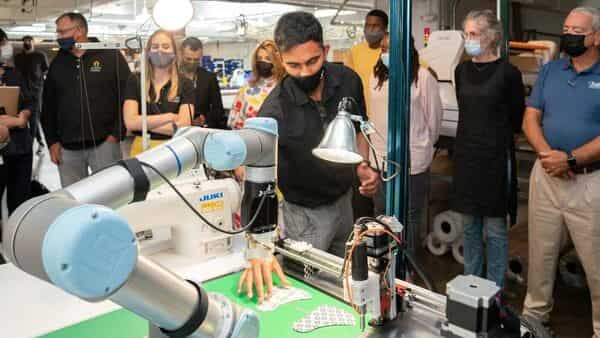
I’ve written more than a dozen columns over the past decade about the new, more-capable breed of robots now used in everything from cooking food and unloading trucks to clearing sewers and making small apartments more livable.
But there also are plenty of examples of how robot innovators’ reach exceeded their grasp.
In 2016, Zume, which aimed to make pizzas with robots in the back of delivery trucks, launched in Mountain View, Calif. After a 2018 investment by SoftBank that valued the company at $2.25 billion, Zume laid off half its staff in 2020 and pivoted to other applications for its robots—most recently, molding agricultural waste into sustainable containers.
It’s a less-exciting premise, but arguably a more pressing issue than beating Domino’s at its own game: Discarded single-use plastic is clogging the world’s oceans and landfills. The company hit on its alternative to plastic packaging when it had to develop its own box for its now-defunct pizza business, says a company spokeswoman.
SoftBank Robotics built a humanoid Pepper robot, which was supposed to fill in for humans in customer-service roles. Last summer, the company sold its European branch to United Robotics Group, which ceased production of the robot.
Delivery by both terrestrial and aerial drone is here, but the economics have led to a much slower rollout than Amazon.com founder Jeff Bezos promised on “60 Minutes” in 2013.
Then there were the robot taxis. We were promised they were just around the corner. Developing them was supposedly an existential necessity for Uber and Lyft, not to mention the secret sauce that justified Tesla’s lofty valuation. It turned out that autonomous driving could take place only in limited circumstances, and its rollout—almost exclusively by Cruiseand Waymo—has been much slower than promised.
The transportation revolution still hasn’t arrived
In 2018, scooter-sharing companies Bird and Lime became the fastest U.S. startups ever to reach $1 billion valuations. This November, Bird warned in a regulatory filing that it might run out of money. In December, the company said it would net an additional $30 million or so in financing, and in the third quarter of 2022 achieved for the first time ever “positive adjusted EBITDA,” while generating $73 million in revenue, says a company spokeswoman.
Lime and others persist. Worldwide, Lime had its best year ever in terms of ridership in 2022, with over 115 million rides, says a company spokesman. That represents almost a third of all rides taken on the company’s scooters and bikes since it started in 2017, so “micromobility” might prove lasting (when weather and local regulations allow), but it has yet to become revolutionary.
At least four flying-car companies went public in 2020 and 2021, and now almost every player in that industry is fighting for survival. While many of these companies promised to operate as networks of “flying taxis,” the lack of places for them to take off and land in cities has forced those that remain to pivot to building electric versions of more conventional aircraft.
Three of those companies went public via SPAC, a way to end-run the usual rules for selling shares of a company on a stock exchange. The entire SPAC mania has since become a remarkably good filter for finding which tech companies and trends turned out to be underwhelming.
Consumer goods aren’t actually software
Software, as investor Marc Andreessen suggested in 2011, did eat much of the world—but investors and entrepreneurs also proved willing again and again to believe, erroneously, that non-software businesses could have similar profit margins and growth.
For most of the past decade, the ticket to getting your consumer goods or food startup valued like a software company was for it to be founded by someone from the tech industry—or at least a favorite of engineers and venture capitalists. Thus, a grilled cheese-only restaurant chain called the Melt was in 2011 found worthy of $10 million in investment by the Silicon Valley venture-capital firm Sequoia.
Melt’s founder, the man behind the Flip camera, claimed his team had achieved a huge breakthrough in sandwich technology, and that by 2016 he would open 500 restaurants. By 2017, he had been replaced as CEO, and today, there are just 20 locations, with two more set to open next month. The chain continues to grow—a company spokeswoman said its sales have tripled since 2019—but at a modest pace compared with its founder’s ambitions. Over the course of its life, Melt changed its strategy from being a tech company that serves food to being a restaurant company focused on customer experience, says Ralph Bower, CEO of Melt since 2016.
Similarly, Juicero—recipient of nearly $120 million from big-name investors—seemed for a moment poised to convince Americans that they really needed a subscription for packets of ready-to-squeeze fruits and veggies. In 2017, the company shut down after people discovered that Juicero’s packets could be squeezed by hand, and didn’t require a $400 wifi-connected juicer.
For those not sold on actual food, there was the end of food, promised by Soylent, a darling of engineers who were so busy being productive they didn’t have time to consume nutrients in any form other than a bland slurry. It has since added flavor and rebranded itself as yet another protein drink, and even in Silicon Valley, most people still eat food.
Then there’s Allbirds, an ascendant shoe brand until it became apparent that techies aren’t a population with a durable ability to set fashion trends. “I feel like Allbirds will be part of the 2010s style,” one San Francisco startup founder recently told The Wall Street Journal. “Like, ‘Oh remember those things that we wore?’ ” Allbirds was valued at more than $4 billion at its IPO in November 2021. It is now worth less than a 10th of that.
Allbirds is now in 30 countries, saw a 12% increase in customers in 2022, and half of its sales are to repeat customers, which is twice the industry average, says a company spokesman.
Trying to make face computers happen
When Google Glass made its debut in 2013, the company behind the product was so convinced it would be a runaway hit that it commissioned two giant barges to be mobile showrooms for the devices. Those barges were never finished, and were eventually sold for scrap. In recent years, many others have tried and mostly failed to make smart glasses and headsets happen, from Microsoft’s troubled HoloLens to Snap’s short-lived consumer Spectacles and Meta’s mostly forgettablecollaboration with Ray Ban.
Meta has in the past declined to comment on sales of its Ray Ban camera-equipped glasses, saying only that the company has been “very pleased with user reception to date.”
With Apple working on its own “augmented reality” headset, it’s possible that face computers are one of those dreams so tempting to engineers that they just can’t help but try to make them happen.
The marketplace economy
One of the most lasting innovations of the tech boom has been the “sharing” economy and its kin, the marketplace company. What Uber, Airbnb, Etsy and the bulk of Amazon’s retail business have in common is that they operate platforms for what are called two-sided markets, where the primary job of the company is to sit in the middle and take a share of the transactions they facilitate.
It’s easy to forget there was a time when Uber and Airbnb were new and it seemed implausible that people would widely adopt the habit of getting into strangers’ cars or staying in their homes. And yet these became giant businesses, demonstrating that sometimes the least-plausible ideas can be among the most transformative.
And while Amazon pioneered a marketplace model of retail—building on ideas from that darling of an earlier tech boom, eBay—this model of directly connecting manufacturers to consumers is now widespread, and coming to dominate every kind of online retail.
It might sound cynical to say that one of the most impactful innovations of the tech boom is the reinvention of the middleman. But it’s also illustrative: What are middlemen and the marketplaces they run but conveyors and translators of information—areas in which the tech industry has always excelled?
In these successes there are lessons for everyone in business. Generations of academics and entrepreneurs will attempt to process and learn from them. For now, we should recognize that sometimes what’s needed to mark an era, in addition to a eulogy, is an epitaph:
What a boom it’s been.
(For more WSJ Technology analysis, reviews, advice and headlines, sign up for our weekly newsletter.
Write to Christopher Mims at christopher.mims@wsj.com)