

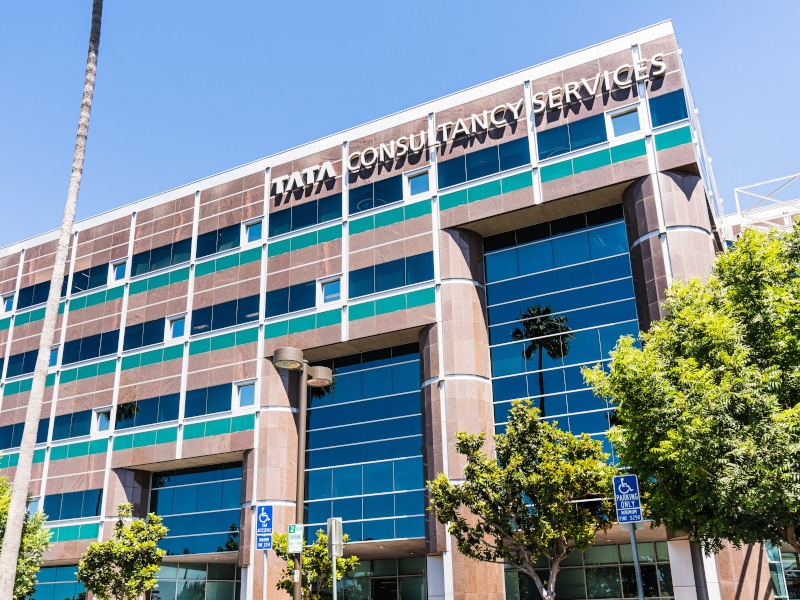
Vish Gain spoke to Dr Ashok Maharaj, head of the XR Labs at TCS, about how the Indian IT giant is shaking things up in the metaverse.
Tata Consultancy Services (TCS) is one of the world’s largest software providers with more than half a million employees across nearly 50 countries. And while it boasts the accolade of being the second most valuable IT services brand in the world, the Indian behemoth has also been ranked as one of the world’s most innovative companies.
It is no surprise then, that TCS has an interest in the emerging space of the metaverse. A tech buzzword of our times, the metaverse has existed as a concept since the 20th century but was popularised last year when Facebook rebranded to Meta to focus on building a metaverse for the future.
Expected to revolutionise the way humans work, play and interact, the metaverse relies on virtual and extended reality technologies being developed at warp speed by start-ups such as Engage XR as well as Big Tech giants such as Meta and Apple.
But how exactly do we define the metaverse? Ashok Maharaj, head of the XR Labs division of TCS building extended reality technologies, thinks that it is too early to have one universal way of describing it.
“If you would have asked what the metaverse is a month back, I would have given you a definition. And the previous month I would have given you another definition. So, the definition of metaverse is a moving target now,” Maharaj told me in an interview.
“What we’re seeing in the world now is what I call the proto-metaverse or a precursor to the metaverse because the real metaverse doesn’t exist yet. This is because the physical-digital coexistence people have been talking about is of a very high order of computing power.”
However, Maharaj has a preferred way of describing the elusive concept that is set to be the “next generation of the internet” based on five principles laid down by Unity CEO John Riccitiello. This version, he said, is ‘always real-time, mostly 3D, mostly interactive, mostly social and mostly persistent”.
How it all began
TCS first embarked on the metaverse journey in around 2017, when the IT company was working with an unnamed major European airline client. Losing millions on just shuttling people between two places, the airline wanted to see if there was a solution in the virtual realm.
“So, their ask was very simple. Is it really possible to teleport photorealistic avatars from one location to another location and do official meetings?”
It was then that TCS launched itself into the metaverse. The company launched a platform called Avapresence – a portmanteau of the words ‘avatar’ and ‘presence’ – that uses cloud, blockchain AI, internet of things and XR technologies to solve key problems for customers.
Through Avapresence, which Maharaj describes as a ‘virtual collaboration suite’, up to 100 employees or clients can meet, shake hands with haptic feedback, explore an imported 3D world with spatial sound, and conduct collaborative discussions akin to physical interactions.
Part of the reason TCS jumped on the metaverse early on was the geographic spread of its employees, stationed around the world and often members of the same team dealing with the same clients. Training and onboarding, too, benefitted from metaverse tools, said Maharaj.
“Whatever our competitors are doing now, we have done that in 2018 because we had a real need for it.”
While this means many at TCS are accustomed to spending time in the metaverse through tools such as VR and XR headsets, many of its clients aren’t. Maharaj said that most of the customers who come to TCS with a problem have never worn a full 6DOF (six degrees of freedom) headset – the most advanced VR headsets used today to access the metaverse.
“So, getting acclimatised to a full VR environment is a major transition for them. It is then that they really realise the power of this medium. Once when they are hooked on to the device, they begin to co-create with us, which is what we really want because we are technology enablers.”
Surveillance concerns
According to Maharaj, the metaverse and its associated technologies are expected to take flight en masse somewhere between 2025 and 2030. However, there are some ethical concerns that can crop up as the technologies creep into people’s homes and go mainstream.
One of the main concerns, according to Maharaj, is surveillance.
“Currently, your iPhone only looks at your face, right? You know for unlocking it. In augmented reality or when you are launching a full-fledged metaverse experience, it’s no longer your faces, or it’s no longer you. It’s about the spaces that are surrounding you,” he said.
He argues that the devices now have access to viewing our personal spaces such as our rooms when the technology is deployed. And this, he warns, has the potential to give governments “enormous amounts of information” that can lead to state surveillance. “This will become a big topic of discussion in the coming years.”
However, while there are concerns around this emerging technology, its benefits outweigh any speculative negatives for Maharaj. While some view as the prospect of a virtual future where people meet each other in person less often as dystopian, he has a different view.
He argues that the same dystopian claims were made for things such as email and LinkedIn, those mediums are essential to communication and collaboration today and viewed without suspicion.
“For some of these technological creations, when they were first launched, the same anxiety, same dystopian thought process was always there. For any new technology, it is endemic to the discourse, right? So, you can’t avoid it. For me, it only enhances the branding of the tech.”
TCS innovation lab in Ireland
TCS, which has been operating in Ireland for more than 20 years, employs more than 1,100 people in the country. It is now building its first new global delivery centre in Letterkenny to service local and global companies that have a presence in Ireland and serve global customers.
Deepak Chaudhari, TCS country head for Ireland, told SiliconRepublic.com that the company is having “a number of exploratory discussions with clients who have expressed an interest in how they can embrace the metaverse as part of their digital transformation journey”.
“Metaverse coupled with artificial intelligence, blockchain, 5G and 6G technologies is going to revolutionise the way we do business; where virtual and real objects co-exist to create persistent digital spaces.”

Night shot of the TCS Global Delivery Centre in Letterkenny, Co Donegal. Image: Tata Consultancy Services
Chaudhuri added that TCS is continuously adding to its talent pool in such emerging technologies by “developing the skillsets of our existing employees in Ireland and attracting new talent with skillsets that can be directly applied to the metaverse”.
This includes roles such as XR developers, blockchain developers, solution architects, cloud and multimedia experts.
“Over time, we are looking to further build out our local metaverse capabilities through our own Digital Innovation Lab based at the TCS Global Delivery Centre in Letterkenny,” he added.
“The innovation lab provides a physical and digital space to co-innovate with our clients and partners on projects that move from ideation to creation in real-life.”
10 things you need to know direct to your inbox every weekday. Sign up for the Daily Brief, Silicon Republic’s digest of essential sci-tech news.