
Augmented reality (AR) is an immersive technology that unlocks a variety of benefits for the retail sector. It is much easier to implement for shops, conferences, and expos than virtual reality (VR). AR technologies are available on millions of Android and iOS smartphones, while the latter requires specialised hardware.
Online shoppers can also experience hands-on retail demos, combining convenient digital content with personalised physical shopping experiences. Over time, retailers have seen a massive rise across the AR market for their goods and services.
According to a September 2021 Insight Partners report, the AR retail market is expected to grow at a 24.8 percent compounded annual growth rate (CAGR) from 2021 to 2028. This will surpass $17.8 billion USD in value by the end of the forecast period.
During and after the COVID-19 pandemic, AR technologies demonstrated how consumers could access seamless shopping experiences without travelling to physical stores.
Understanding the Potential of AR in Retail
AR is an immersive, interactive technology where hardware overlays digital real-time 3D (RT3D) on a user’s field of view (FoV). This takes place in several ways:
- Mobile AR – Arguably the most common form for AR, users can view content in their smartphones to superimpose visuals on their surrounding environments. This allows digital objects to interact with users via planing, light detection and ranging (LiDAR), and hand and eye tracking. This calculates distance, interactivity, and data anchors across physical and immersive spaces. Meta’s Spark, Google’s ARCore, and Apple’s ARKit platforms are some of the best platforms for this.
- AR smart glasses – Users can also view AR content with smart glasses. This method is more expensive than mobile AR but supports more precise applications. Companies such as Xreal, RealWear, ThirdEye, Magic Leap, and Lenovo have developed smart glasses for industrial field services. Verticals such as manufacturing, retail, customer service, and emergency services have begun tapping the devices. Users can also share files, host video calls, repair infrastructure, train and onboard, and even perform surgeries with the tools.
- WebAR – WebAR operates similarly to mobile AR, but does not require standalone apps like Snapchat or Pokémon Go. Instead, it works directly via the mobile phone’s browser, producing AR experiences as easily as any other web page.
Of the three, mobile AR is best suited for retail use cases while WebAR provides access to nearly all customers with smartphones. This eliminates the need to invest in specialised devices for AR-powered shopping.
Implications of AR Technology in Retail
AR can transform the retail sector in a number of ways:
It Elevates Try-and-Buy to a Whole New Level
Many customers prefer try-and-buy retail models, where they obtain a sample or test version of an item before purchasing the real thing.
Due to limitations online, customers could not access hands-on products with try-and-buy programmes. However, AR enables users to virtual try-on products from online shopping apps before purchasing. Companies such as IKEA, Tommy Hilfiger, Wal-Mart, Estee Lauder, and many others have leveraged AR firms for these initiatives.
Companies featured in this category include ZERO10, Reactive Reality, ARTISANT, Snap, among many others.
Reducing Product Returns
As online shopping grows in popularity, companies have also faced an increasing trend — historically high return and refund rates. Reports in 2021 found that customers hit retail stores with over $4.4 billion USD in product returns. Additionally, stores informed customers to keep the products due to the high costs of logistics.
A 2023 Signifyd report found that, at the height of the pandemic in the fourth quarter (Q4) of 2020, returns were highest with womenswear and footwear at 23 percent and 20 percent across the UK, respectively. Health and Beauty product returns reached four percent, despite restrictions on returning hygiene products.
AR retail initiatives aim to improve customer knowledge of products, allowing them to make better, more informed choices before buying. This will significantly reduce purchase returns and refunds while helping the environment.
Driving Product Personalisation
In a way, traditional online shopping experiences sacrifice the personal touch – of visiting a store, interacting with an executive, picking out a product, trying it, and considering alternatives, before making a purchase.
AR-powered retail allows customers to personalize certain aspects of online shopping. For instance, they may place a painting bought online directly on their walls through an AR app, which enables personalized views of how the product looks against the customer’s walls in a unique experience to the individual.
Improving Self-Service
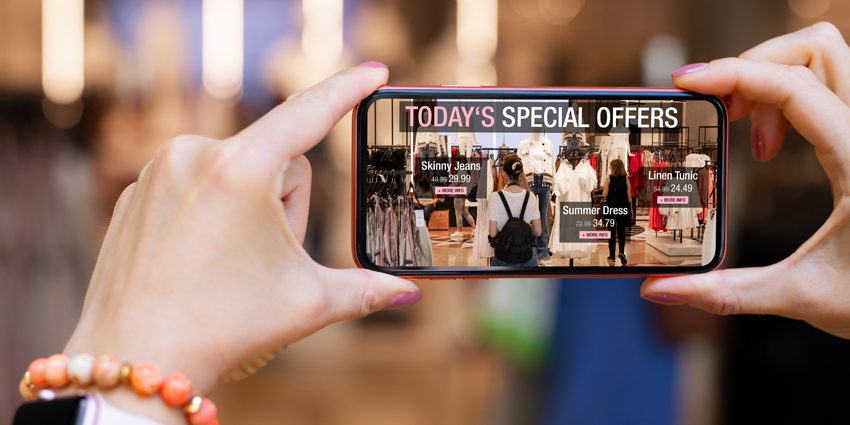
Retailers can also combine mobile AR with physical stores to create positive implications for self-service. Customers can simply hold up their mobile phone in front of an item, and the AR app will immediately display product details, assembly instructions, provenance history, and other relevant information to the purchase. These tools are useful in a number of product categories such as DIY furniture, antiques, indoor plants, and so on.
Activating Brands for Customer Outreach
AR is a new and emerging technology, so AR campaigns tend to capture consumer attention. Ads on AR platforms can receive a lot of traffic and strengthen brand recall.
For example, several brands partnered with Pokémon Go to direct users to sponsored locations through its AR features. Firms can embed AR advertisements across physical, geospatially-anchored spaces to provide customers with an engaging glimpse into the brands around them.
Pros and Cons of AR in Retail
The greatest benefit of using augmented reality is boosting engagement for online and in-person experiences. For example, customers on a specific brand’s AR app are less likely to switch to rival companies.
AR retail experiences also leave lasting impressions on consumers, enticing shoppers to return to online and brick-and-mortar stores for additional purchases. Companies such as Avataar, NexTech AR, Snap, Meta, and others are facilitating the creation of AR-friendly product catalogues with their solutions.
However, AR companies must execute their eCommerce shopping experiences or face difficulties with customers. Should RT3D assets create counterintuitive AR try-on or in-room demos or poorly-executed metaverse user experiences, this could substantially put off customers from reusing these experiences.