

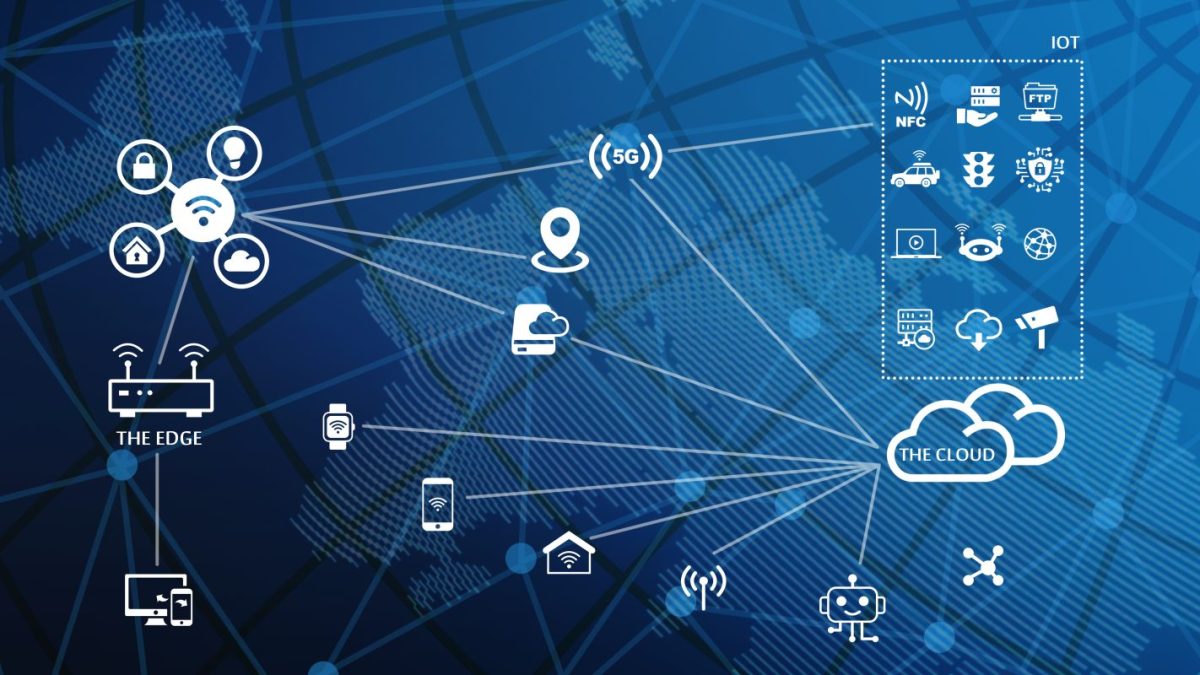
If it lives up to its billing, the metaverse will offer a unique opportunity for users to immerse themselves in a virtual environment. For this to be achieved, there must be seamless interaction between the participant and the virtual environment in real time. That means interaction must be highly responsive, ensuring that all graphical elements update rapidly to create a sense of presence in the virtual world.
In this, edge data centers and devices are set to play a crucial role.
To ensure a successful experience, the user must be able to view the rendered virtual environment with utmost clarity, and the system must respond in real time to any gestures or actions by the user. Edge computing, networking and related advancements are required for the metaverse to prove out estimates like Accenture’s. That consultancy expects the metaverse to fuel a $1 trillion revenue opportunity by the end of 2025.
Clearly, building the metaverse’s foundation requires layer upon layer of behind-the-scenes technology, such as data centers and network infrastructure. The latency requirements of the metaverse are near zero, and this necessitates the need for data centers that are in close proximity to users, with blazing-fast network speeds.
Event
GamesBeat Summit 2023
Join the GamesBeat community in Los Angeles this May 22-23. You’ll hear from the brightest minds within the gaming industry to share their updates on the latest developments.
As we delve further into a new era of virtual reality, decentralized edge data centers and devices are set to play a crucial role. By providing seamless access to the metaverse for users from all corners of the globe, these technologies hold the key to transforming our digital experiences in the near future. Edge computing can revolutionize the way we experience the virtual world.
One of the potential problems that can arise in both traditional and cloud data center architectures is latency, which can create slow response times and delays, ultimately leading to a suboptimal user experience. In addition, poor reliability or availability can deter visitors, while high bandwidth costs can significantly impact the organization’s metaverse budgets. As the demand for metaverse applications continues to grow, these potential challenges could be a significant barrier to adoption. Therefore, it is essential to overcome these obstacles to ensure that the metaverse offers an immersive and seamless experience for users while also being cost-effective and reliable for organizations.
Cloud-native edge infrastructure can address these shortcomings and provide optimized service chaining. It can handle a tremendous amount of data processing while delivering cost-effective, terabit-scale performance and reduced power consumption. In doing so, edge computing can move past closed networking models to meet the demanding data processing requirements of the metaverse.
“Edge computing allows data to be processed at or near the data source, implying that commands and processes will occur promptly. As the metaverse will require massive data simultaneously, processing data quickly and seamlessly depends on proximity,” Prasad Joshi, SVP and head of emerging technology solutions at Infosys, told VentureBeat. “Edge computing offers the ability to process such information on a headset or on the device, thereby making that immersive experience much more effective.”
The emergence of the metaverse has also led to a significant surge in data generation, and the data centers that handle these workloads generate enormous amounts of heat due to the massive power consumption required to enable AR/VR (augmented reality/virtual reality) applications. The power, space and cooling limitations of legacy architecture further exacerbate this data surge. While these challenges impact consumer-based metaverse applications, the stakes are much higher for enterprise use cases.
Joshi believes that the real-time immersive nature of the metaverse depends on the expansive use of the cloud and says that digital twins will have a significant impact through edge technologies.
“As more and more AI applications experience extreme growth, it will be critical to employ edge computing to ensure cloud stability. Hyperscalers must adapt to acknowledge the emerging shift toward sustainability in cloud and edge computing to keep up with increasing demand,” said Joshi.
As metaverse applications continue to proliferate, the need for service function chaining to automate network traffic flows becomes more critical. Unfortunately, service chaining based on virtual machines still suffers from duplication, latency, high costs and resource inefficiencies.
Ranny Haiby, CTO of networking, edge/IoT and access at Linux Foundation, believes that end devices will always be constrained by power, size and weight. Therefore a lot of the processing can be offloaded to the edge.
“Based on the processing, storage and network latency requirements of different metaverse applications and protocols, there will likely be a continuum of processing starting from the end-user devices, the network edge and the cloud. The edge emerges as the sweet spot to fulfill all requirements for a multimodal and tactile user experience,” said Haiby.
Haiby explained that as the metaverse calls for ubiquitous high-bandwidth connectivity, there also needs to be a high degree of automation in how edge resources are deployed.
“Edge automation and orchestration technologies will play a key role in the success of metaverse use cases. In an ideal world, the edge services supporting the metaverse apps should seamlessly follow the end users as they move between cell sites, wireless access points and fixed access points,” added Haiby.
Shaping a reliable virtual future through the edge
Achieving optimal latency control in the metaverse requires more than just edge computing; it also involves edge connectivity, which relies on consumer broadband. While faster broadband does offer lower latency, there are other factors to consider when it comes to latency control beyond just speed.
To effectively manage latency, it is critical to minimize the hops or devices between the user navigating the metaverse and the software that interprets their actions and translates it to what the user “sees” and what others see. By reducing the handling, organizations can ensure minimal delay between the user’s actions and the system’s response, resulting in a seamless user experience.
Fortunately, edge computing technology can aid in reducing latency and improving the quality of service for users in the metaverse. With edge computing, data-gathering clients can be scattered densely, which allows for real-time analytics and big data processing. This means that data is processed quickly, and the results can be used to improve the overall user experience.
David Treat, senior managing director and co-lead of Accenture’s Metaverse Continuum business group, says that as the metaverse advances, edge computing will have an increasingly crucial role in shaping its future while simultaneously improving performance and efficiency and shaping new business models.
“Technical performance is crucial to metaverse applications and their real-time experiences. The faster, smoother experience offered by edge computing can translate into increased revenue,” Treat told VentureBeat. “The cost efficiency of distributing processing power and storage across devices through edge computing can help save on infrastructure costs while reducing the risk of a single point of failure.”
Treat says edge technologies, such as edge AI, caching and devices, will play a critical role in creating a reliable, latency-free immersive experience for users. He explained that the evolution of edge technologies would benefit a range of applications — from the safety of industrial equipment to supporting a customer’s individual needs and enabling virtual to exist as a true extension of real-world experiences.
“A network of nodes can be connected through edge devices and servers, bringing data processing closer to where it is generated. This could be as simple as edge caching, making content on a VR device smoother, with fewer delays and glitches,” said Treat. “As this advances, AI can translate real-time data into insights, evolving to discern preferences in decision-making and personalizing user experiences in response to real-time data.”
Likewise, Micah White, VP of research and development at enterprise software solutions firm CGS, says that edge computing devices can be used to process and store data from AR/VR devices to provide more immersive remote-training experiences.
“Today, edge devices are used to track and process the data from sensors and cameras on a headset, which could be used to display a simulated environment to trainees in global locations. Such use cases unlock the ability to instantly provide immersive step-by-step guidance, coaching and collaboration to anyone with a device. This will be a major game changer for adopting metaverse in the enterprise — specifically for frontline workers, but the use cases across industry and roles are much broader,” White told VentureBeat.
But White says that there are still several challenges for companies looking to integrate edge devices and infrastructure into their metaverse strategies, and companies should consider doing the following before moving ahead:
- Security — Edge devices and infrastructure can be vulnerable to cyberattacks, malware, and other malicious attacks. Companies must ensure that their edge devices are secure and well protected.
- Accessibility — Edge devices can be challenging to access and require specific hardware. Companies must ensure that their systems can be accessed from different locations and by various devices.
- Cost — Setting up and maintaining an edge infrastructure can be costly. Companies must carefully consider their budget when planning for edge integration.
- Interoperability — It is crucial to ensure that edge devices and infrastructure are compatible with other technologies and services the company uses. To overcome these challenges, companies should invest in robust security measures, provide easy accessibility and promote device interoperability. Additionally, companies should look into cost-effective and cloud-based solutions that are tailored to their needs and can be easily scaled.
“One big challenge facing companies that are looking to leverage edge technology for metaverse applications is that there is not one unified global solution out there to take advantage of, but rather a plethora of different technologies, platforms and providers, and many differences in terms of the level of development and availability in different regions of the world,” said Charles Tolman, CTO of music metaverse platform Pixelynx. “All things considered, edge computing is still in its infancy.”
Tolman said it is essential first to educate oneself as much as possible and then take the plunge and start building.
“Edge computing will continue to advance and grow to meet the needs of our business and the users we serve, but only if we step forward to take up the challenge and start figuring out how best to use it,” added Tolman.
Mouna Elkhatib, CEO, CTO, and cofounder of edge AI processor manufacturing and solutions firm AONDevices, predicts that using edge technologies for the metaverse will generate new use cases, business models and revenue streams for emerging businesses.
“Computer vision, sound recognition and motion sensing/detection at the edge will allow the metaverse to securely collect more data about the user and the user’s environment, enabling systems to use that data to offer personalized experiences and features. Doing so can significantly enhance the user’s experience for applications such as gaming, education, remote work and more,” said Elkhatib.
She said such use cases would provide emerging businesses with new revenue streams, including personalized content streaming and targeted advertising. In addition, new business models such as subscription-based services for premium content, revenue for user-generated content, and pay-per-use models may also emerge.
For his part, Pixelynx’s Tolman says that edge technologies can be leveraged to advance the Web3 vision of putting data ownership into the hands of the users and offering new business models that emphasize property rights and interoperability.
“We can offer creators more and better ways to self-publish, more opportunities to connect with their audience, see greater earnings and have full transparency into how revenue is generated and royalties are paid,” Tolman said. Furthermore, he added that as the metaverse grows, and with it, the demand for new content and interactive experiences, technologies that enable greater scalability and faster data processing and transaction speeds will become increasingly critical.
“Edge computing technology is one such innovation that will support the development of a sustainable metaverse at mass scale,” he said. “It is critical to that vision, so its growth is inevitable.”
VentureBeat’s mission is to be a digital town square for technical decision-makers to gain knowledge about transformative enterprise technology and transact. Discover our Briefings.