

As companies like Google and Facebook grew into giants in the early 21st century, regulators chose largely not to interfere in the still-young market for online services.
Now regulators have reversed course: When it comes to tech, they want to see into the future and beat companies to getting there.
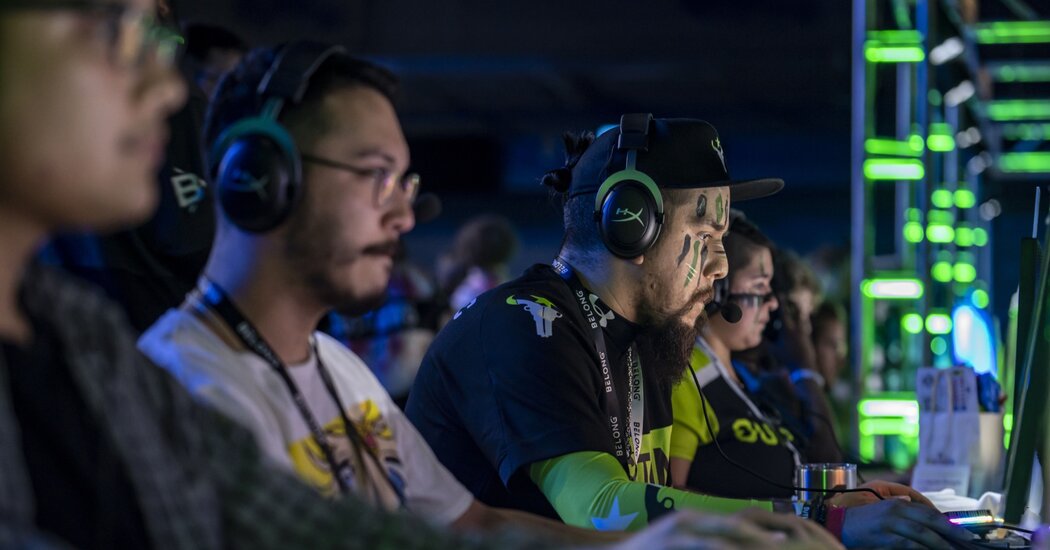
The decision by the British authorities on Wednesday to block Microsoft’s $69 billion bid for the video game giant Activision Blizzard exemplified the new approach. British officials said a core reason for rejecting the deal was how it could threaten competition in the nascent market for cloud gaming, which lets users stream their favorite video game titles.
That argument is becoming familiar. The U.S. Federal Trade Commission, which last year sued to block Microsoft’s deal for Activision, also raised concerns about competition in cloud gaming, though the agency focused mostly on the impact to the traditional console games business.
Then this month, the F.T.C. ordered the biotech firm Illumina to sell a company that it had acquired, saying the deal could harm competition in the young market for cancer blood tests. And in July, the F.T.C. sued to stop Meta, the owner of Facebook and Instagram, from buying a virtual reality start-up because, the agency said, the purchase would give the tech behemoth unacceptable power over the emerging metaverse.
The actions are part of how governments, frustrated by the speed with which Silicon Valley companies rush to dominate new technologies, are trying to predict how the tech giants could hurt competition in new areas and stop it before it happens.
“Enforcers have to be ahead of the ball on this,” said Diana Moss, the president of the American Antitrust Institute, which receives some funding from Microsoft.
Regulators’ fascination with foreseeing how the tech giants could harm competition stems largely from their perceived failure to do so in the past. In the 1970s and 1980s, courts and regulators made it harder for the government to prove that an acquisition could illegally damage potential future competition. Courts have also said it is hard to sort through the uncertainty of young areas of the economy. So regulators focused largely on whether a deal could hurt competition in mature markets.
Whether the new predictive tack will work for regulators is unclear. In February, a judge ruled against the F.T.C.’s attempt to stop Meta’s virtual reality deal. And Illumina has said it plans to appeal the agency’s order to sell its blood test company.
Still, divining power plays by the tech giants has become a central goal for lawmakers, activists and regulators who say those companies have too much clout. After arguing that governments were effectively asleep at the wheel while Google, Amazon, Meta and Apple ballooned into giants, many critics are now in government themselves and under pressure to do things differently.
The biggest tech companies, for their part, are jockeying to own the next big thing. Meta is investing heavily in virtual reality, and Apple is working on augmented reality glasses. The explosion of artificial intelligence chatbots has reinvigorated the fight between Google and Microsoft for control of online search.
The F.T.C. and the Justice Department declined to comment specifically on their interest in nascent technologies, beyond earlier statements. Microsoft declined to comment, and the British Competition and Markets Authority did not respond to a request for comment.
The lack of regulatory action as the tech giants mushroomed is well documented. The F.T.C. declined to challenge Facebook’s purchase of Instagram in 2012 and WhatsApp in 2014, for instance. Then in 2020, the agency sued Facebook over antitrust concerns, arguing that those acquisitions had allowed it to illegally cut off young competitors.
Similarly, the F.T.C. let Google buy the ad software DoubleClick in 2007. This year, the Justice Department said Google had abused a monopoly over the ad market.
Gene Kimmelman, a former member of the Justice Department’s antitrust staff who favors more regulation of the tech giants, said regulators in the internet’s early days had been gripped by a “reticence to predict what would happen.”
“Then you fast-forward 20 years, and there’s a lot of critical introspection about why we didn’t see what was coming,” he said.
By 2021, regulators were looking more at future markets. That year, the F.T.C. sued in its internal court to stop Illumina from buying Grail, which makes blood tests to detect cancer. The judge on the internal court ruled for Illumina, which had already taken the unusual step of closing the deal.
This month, the F.T.C. voted to reverse the judge’s ruling and demanded that Illumina sell Grail. Illumina plans to appeal that decision to a traditional federal court.
Last year, the F.T.C. sued to block Meta from buying Within, which makes a virtual reality fitness game, saying it would hurt competition in the market for the so-called metaverse, where users play, work and socialize in virtual worlds. In February, a judge declined to temporarily stop the deal from closing, and the agency abandoned its challenge.
In trying to block Microsoft’s purchase of Activision — the largest consumer tech deal since AOL bought Time Warner decades ago — the British authorities focused squarely on the deal’s impact on cloud gaming, which is currently a niche market.
The officials said cloud gaming could be worth $13.7 billion globally by 2026 and worried that Microsoft already accounted for 60 to 70 percent of current services. Microsoft also has the tools to operate an entire cloud gaming ecosystem, from its Azure cloud system to its Xbox services, the agency said.
But cloud gaming is in its infancy, and there is no guarantee that the technology, which requires huge amounts of computing power and often has glitches, will become mainstream. Sales from subscription services that exclusively offer cloud gaming are expected to hit about $288 million globally this year, according to Ampere Analysis, a London firm.
“They’re predicting what’s going to happen,” said Piers Harding-Rolls, a gaming researcher for Ampere Analysis. “There is some legitimacy to that, but it’s hard to predict. It’s a very dynamic space.”
Antitrust officials appear to be looking ahead to other young technologies, too. At a March event, the Justice Department’s top antitrust enforcer, Jonathan Kanter, and the F.T.C.’s chair, Lina Khan, said they thought A.I. products like ChatGPT could be potentially transformational — and ripe for domination by the tech giants.
“This is another transition that we’re looking at closely,” Ms. Khan said, “to make sure that if this is an opportunity for competition to really enter the market and disrupt, that we’re allowing that to happen rather than illegal tactics locking up the market.”