


Venture capital has been a key driver for myriad startups in the blockchain space. Founders know how competitive it can be to secure valuable VC funding that can keep the lights on and employees paid during the critical first days of a new project.
In a new interview series, Cointelegraph sits down with executives at some of the most active funds investing in the crypto space to understand their perspectives, hear their successes and failures, and know what gets them excited about a new project in the Web3 space.
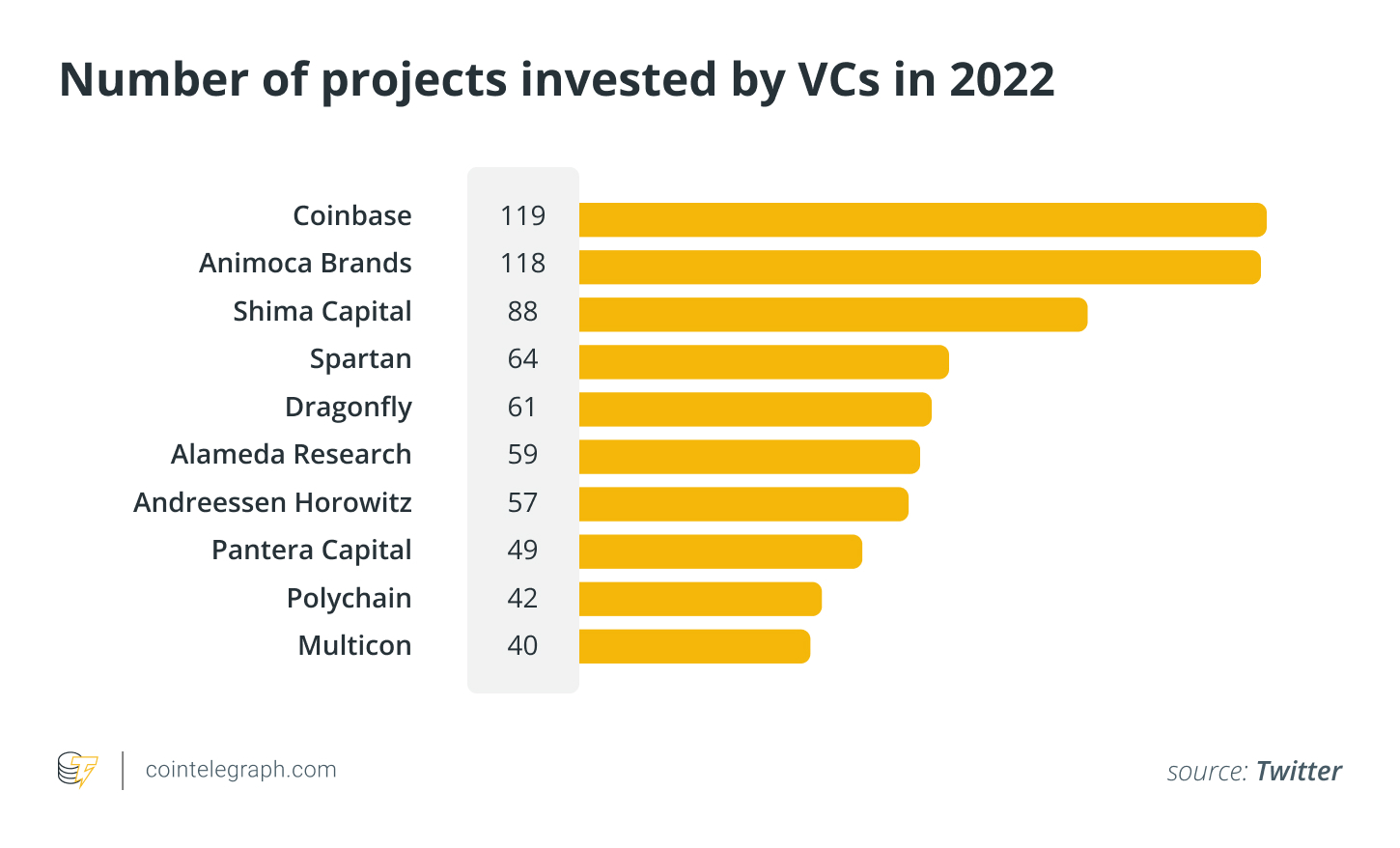
This week, Cointelegraph spoke with Shima Capital’s founder and managing general partner, Yida Gao. He founded Shima Capital in 2021, and the fund has since been very active, investing in nearly 100 projects. Gao is also an adjunct professor at the Massachusetts Institute of Technology.
Cointelegraph: Shima Capital was founded relatively recently, yet the firm has already invested in some of the most prominent projects in the crypto industry. As of now, which investment would you consider to be the most successful?
Yida Gao: This feels like asking a parent to choose their favorite child! I would say it’s still too early to make that call, as you alluded to. We definitely have a few that have performed pretty well and attracted good traction, such as Wombat Exchange, Berachain, Magna, Monad Network, etc. We’ve also incubated several projects that we will announce soon. For now, we’re proud of all the portfolio companies for pushing through this continuing bear market. So, the fact that they’re still standing means they’ve successfully navigated one of the toughest situations they’ll ever face.
CT: Who were your initial investors, and how did you persuade them to invest in such a high-risk industry?
YG: Although some of our own investors were named in earlier announcements, we’ve since taken a more personable approach and prefer to respect their privacy. That said, I’ve been in the finance and venture space for a decade, so I have a track record in both traditional and Web3 investing. I believe having navigated through the ups and downs in terms of the market and market sentiment played a key role in gaining the trust of some of the most successful investors in the world.
CT: In the early days of Shima Capital, how did you attract your deal flow?
YG: Although Shima Capital itself was new, and still is to a degree, I — having been around the space since 2015 — have tried to build a strong global network and reputation in the industry. Additionally, we have a world-class team at Shima who individually bring additional credibility and esteem to our fund. Our motto of “running through walls for our founders” seems to help attract deal flow as well.
About the industry
CT: Given the recent volatility in the crypto market and high-profile cases involving companies like Celsius, 3AC, Alameda Research and FTX, how do you justify the risks to your investors?
YG: Most of our investors have been investing in Web3 and crypto for a while and are well aware of the risks involved in this industry — or any other industry, for that matter. We maintain quarterly regular updates to our investors and have frequent emails, messages or calls with them too. We believe that this is more about building up relationships and trust, and I work hard myself and as Shima Capital to maintain strong relationships and build lasting trust with everyone we work with.
CT: FTX was considered to be an industry blue chip for some time, but recent events have raised questions about the need for regulations. In your view, what kind of regulations could prevent such scenarios as happened to FTX, Alameda and 3AC from happening in the future?
YG: We invest in projects we believe to be upstanding and responsible, with or without official regulations. For Shima Capital itself, we are registered with the Securities and Exchange Commission and work daily to maintain SEC compliance. It’s debatable whether regulations could have prevented the aforementioned scenarios, but as long as we continue working in good faith to all stakeholders, our industry will not just survive but thrive.
CT: What is your vision for the ideal consensus between the crypto community and governments? Moreover, how will the potential tightening of U.S. regulations impact the development of the industry?
YG: As I mentioned previously, there can be a friendly co-existence between regulators and the Web3 industry/community at large. As long as we all strive to act responsibly and regulations do not become too restrictive, the industry will continue its rapid, innovative development.
Recent: Bitcoin ETF applications: Who is filing and when the SEC may decide
CT: One of the biggest challenges for the crypto industry is the lack of mainstream use cases. For many people, this industry is still synonymous with illicit activities such as money laundering and terrorism financing. What do you think needs to happen to change this perception?
YG: I think we’re already making major headways in this regard. Decentralized finance has advanced a lot in the past few years, and the infrastructure has also made progress to support smoother user experiences. We have also been tracking projects in the gaming and consumer verticals. This can mean a lot of things to different people, but essentially, it’s about providing digital property rights access to all and owning your assets, like playable characters, for instance. As more and more well-known non-crypto brands join Web3 in some capacity, it brings more credibility.
CT: Are NFTs a thing of the past, or do you anticipate their evolution into something new? What, in your opinion, is the next big thing?
YG: Like any other “hot new thing,” there can be ups and downs throughout the lifecycle. For NFTs, we’re already seeing an uptick in NFT volume since then, and more and more mainstream brands are coming on board. Recent developments are skewing more toward NFT financialization, or NFTFi, which is another sector we have been focusing on. We believe that NFTs could maintain this rejuvenated momentum and regain popularity. But to open it up to additional verticals, we see real-world assets, or RWAs, and regenerative finance picking up steam this year, along with more innovative on-chain ideas like restaking.
MIT Bitcoin Expo running 10 yrs strong https://t.co/wPW9MAXuEj
— Yida Gao (@yidagao) April 23, 2023
CT: The last bull run was triggered by the “DeFi summer.” What catalyst do you think will ignite the next bull run?
YG: Wouldn’t we all love to have this answer?! But the truth is, there are so many factors that will make this happen, some within crypto and some external, like regulation from governments. If I had to pick two potential “summers,” it would be RWAs and Web3 gaming.
CT: In light of the recent collapses of several big banks, many people are concerned about the existing financial system. How do you envision the future of finance and economics, and what new norms do you think will emerge, and in what timeframe?
YG: It’s much easier to pinpoint what went wrong after something happened, but unfortunately, there are no crystal balls here. I do think that the worlds of traditional and blockchain-based financial systems can co-exist, and likely will in the new future. Traditional banks have been looking into blockchain and crypto for years, so it’s only a matter of time before they gain widespread and mainstream popularity. A big unlock will be clearer regulations in industry-leading countries like the United States.
CT: The world is buzzing about AI and ChatGPT. There are those who believe AI will “steal jobs,” while others are confident it will enhance our lives and make them easier. What is your perspective? Furthermore, what significant changes do you think AI will bring to the crypto industry?
YG: Right now, AI and ChatGPT are great idea generators and editors. You can plug in a request for “Web3 marketing practices,” for instance, and it’ll generate 10 ideas. Some good, some less good. Same with editing. Throw in some web copy or an article and ask the AI to critique it for you, and it will. But that’s why humans will always be needed. There’s a literal limit to how much ChatGPT knows (September 2021 is the end-line for its knowledge base as of today). Anyone can use AI as a jumping-off point, but we’ll always need humans to edit and refine and add and remove. Areas where crypto might be able to help include democratizing data labeling with token incentives, data proofs and proof of AI inference calls to demonstrate model verification.
Portfolio companies
CT: What does an ideal startup look like to Shima? Is it the idea, the personality of the founder, the team or the traction that takes priority?
YG: Honestly, we take it all into consideration! We need to believe in the product first and foremost, but we also need to believe in the founder’s vision and the team’s ability to execute on that vision. A brand-new idea won’t have traction in terms of users at this point, but the path to traction should be clear. We look at the entire package when doing our due diligence, which generally falls into three buckets: team, product and market. As a seed fund, we care most about the team since product and market can always change in this fast-moving industry.
CT: Shima Capital has invested in several DeFi startups. How do you assess the risks associated with DeFi investments, and what measures do you take to mitigate those risks?
YG: There are just as many risks investing in Web2 as there are in Web3, including DeFi. What’s important is to understand that there are risks no matter what, and to identify and weigh risks as best you can before investing. We spend considerable time on due diligence and researching all aspects of the business, from the idea to the team to the inherent risks, and then make a well-informed decision. For DeFi specifically, it’s important to also review the smart contracts, if possible, to make sure there are no known bugs. (De.fi is a good tool to automatically look for common smart contract vulnerabilities.)
CT: What is the best way for a startup to capture your attention?
YG: All the things I mentioned throughout this interview! A solid idea, founders uniquely positioned to capture the market for said idea and a clear go-to-market strategy presented in a concise presentation.
CT: Does Shima invest solely in equity, or do you also invest in tokens? In what terms?
YG: We primarily invest in SAFEs [simple agreements for future equity] with token warrants but sometimes invest in pure tokens as well. The terms are deal-by-deal specific.
CT: What is your fastest-growing portfolio company, and what do you believe is the key to its success?
YG: We have several that have performed well through the crypto bear market, such as Wombat Exchange, Berachain, Magna and Monad Network. It’s very hard to hand-pick one from the long list, as the definition of fast-growing would be different for different business models. In order to be successful, we think the founding team is a critical key to success. This includes the team’s capability to identify high-potential markets and execute on strong strategies to capture said market.
CT: How do you discover the best deals?
YG: We have a deep network of connections in the VC world and strong relationships across the industry, from OG angels to exchanges to other strategists. Our investment team also proactively sources deals through hackathons, demo days of accelerators, colleges and even via Twitter. We’re always on the lookout for the next big project.
CT: Many prominent investors, such as a16z and Shima, are investing in Web3 gaming. However, many metaverse and Web3 projects appear to be overhyped. What motivates investors to remain optimistic about Web3 games and virtual environments?
YG: You need to look beyond buzzwords and hype and focus on the underlying technology and — most importantly — the user experience. With gaming, all that players care about is the experience of playing the game. If it’s a good game, they won’t care what technology is used to build it. Most gamers wouldn’t be able to tell you how Web2 games are currently built, but they can tell you which games they like playing and why.
Magazine: How to protect your crypto in a volatile market: Bitcoin OGs and experts weigh in
User experience beats all else, whether it’s Web3 or not! Some of the reasons we’re excited about Web3 gaming include its potential to decrease development cycles via short feedback loops between the developers and its community of gamers, interoperability of digital game assets/IP, new user acquisition strategies in a post-IDFA world [identifier for advertisers rollout by Apple], and novel gaming mechanics like fully on-chain games that are only enabled by blockchain technologies.
This article does not contain investment advice or recommendations. Every investment and trading move involves risk, and readers should conduct their own research when making a decision.