

Non-fungible tokens (NFTs) are quickly rising as a major vertical of the Metaverse, and as content creators engage in the rapidly-developing market of real-time 3D content, Web3 enthusiasts will access greater opportunities for self-expression, tracking, gaming, art, music, and content monetisation.
NFTs build upon blockchain technologies and are sustained by their novel utility: ownership. Users are no longer bound to the servers of major corporations, but now hold democratic rights and voices in the rise of the world’s latest iteration of the Internet.
The digital tool is set to integrate across nearly all verticals, including retail, automotive, fashion, and even government, many of which have employed major corporations such as NIKE, Wendys, and Gucci to even the Barbadian government, with an indefinite number of organisations expected to follow.
For our XR Today round table, we are pleased to welcome:
- Esteban Ordano, Advisor and Founder for Decentraland
- Leila Ismailova, Head of Curated Drops for ARTISANT
- Jack Cameron, Co-Founder and COO for Luna Market Inc
- Cécile Tirard, Founder and NFT Advisor for Le Lapin Digital Lab
The four panellists have shared their insights on the rising global NFT marketplace, the utility and value of the blockchain, as well as the future use cases and applications for the innovative technology.
XR Today: How do NFTs create and deepen engagement for businesses and customers using personalisation, and what is the utility of an NFT to the average consumer?
Esteban Ordano: Ownership of virtual items used to be stuck inside the databases of corporations, like your Fornite or CS:GO skins, but sometimes, games and apps get shut down, and together with them, all your items.
The current reality is that the near-total majority of applications and games are siloed within their own walled gardens, and users can only benefit from the features the manufacturer allows them to. In some sense, these “web2 items” are not yours, meaning you’re not purchasing, but just renting them.

Esteban Ordano, Advisor and Founder for Decentraland
Through their open access, owners of NFTs permanently own their items and digital assets. This is because all platforms can use the same ‘ground truth’ of ownership, thanks to public blockchains like Ethereum or Polygon, and consumers even get to profit from market-related features previously reserved for trading card games.
For example, I used to play Magic the Gathering and when I was starting, I bought the cards of an older guy who was quitting the game. He didn’t have to get permission from Hasbro or Wizards of the Coast, the manufacturing companies, to sell them to me — he owned his cards physically.
NFTs give this exact sense of material ownership to virtual game items by allowing anyone to use OpenSea, Rarible, or the platform of their choosing to liquidate their assets — something you can’t do by default in the vast majority of applications and games.
For brands that outlive the lifespan of their original source, there’s added multi-generational value that they will be able to capture. “This is the lightsaber I built when I was your age” is a phrase that made sense only if claimed by some movie character from Star Wars, but someone in a couple of decades might very well use to refer to their hard-earned in-game NFTs from days past.
Leila Ismailova: We live in a world of symbols, and there’s even a dedicated science to it called semiotics. Fashion has always been one of the most effective ways to distinguish a person’s belonging to a specific social class, wealth group, profession, religion, and others.
Today, digital fashion is the reflection of the world we are morphing into, where we spend more and more time online, create avatars for metaverses, and host important professional meetings in zoom.
Millennials and Gen Z spend even more time in virtual worlds and consider their avatar as an extension of themselves, and one in five Roblox gamers update their avatar daily, so it makes sense for them to represent themselves uniquely by buying branded goods and clothing.
NFT digital fashion helps create people’s personalities online and better express who they are through their looks, without polluting the environment or overconsuming material goods.
For businesses, digital fashion also provides multiple marketing tools to promote brands online and expand businesses. Morgan Stanley’s research claims that NFT fashion could become a $50 billion USD opportunity for the luxury segment alone.
Jack Cameron: Brands looking to tap into real and genuine personalization should engage Web3 and blockchain technology.
I think the problem with current personalization, from an aesthetic metric, is that generative NFTs – the process by which artists create traits and allow the computer to decide on the final image – don’t allow true customization.
Users can’t make the choices they would when they create an avatar while playing a video game, or pick a username when they create an account. The only way they can truly ‘personalize’ their NFT is if they have the money to choose which NFT they like, or that represents them the best, which can create a high barrier to entry.
I think the utilities of an NFT for the average consumer are actually what makes it ‘personal’. From passive income to community engagement, users will have a truly unique experience gated by ownership backed by the blockchain.
Take Wall Street Kongz, one of the highest sought after Discord channels in Web3. If you own a Cyberkongz, you will be able to join the Discord where you will find some of the brightest NFT traders and Web3 thinkers: something you can’t really get anywhere else.
Cécile Tirard: My favourite example of this is the automotive industry, where I worked for the last 16 years and am quite passionate about.

Cécile Tirard, Founder and NFT Advisor for Le Lapin Digital Lab
In the near future, it’s possible that all cars will be fitted with a blockchain and a crypto address, due to the rise of autonomous driving technology, which will help to secure and encrypt vehicle data.
Can you imagine if now, you are able to tag communication to the car itself and not just to the owner, to record and reward brand loyalty for servicing your car at the right time using the brand’s network?
Drivers could also remain updated on the value of their car’s lifespan, receive offers from potential clients that match with new vehicle offers from car dealers, improve car sharing experiences to make the vehicle a source of revenue, and other features — the total experience of owning a car is essentially augmented and the owner can be rewarded for owning a car and avoiding depreciation.
XR Today: Do you see the NFT as a ‘renaissance’ of content creation, and do you believe the technology will lead to a resurgence of the creative industry over the next few years?
Esteban Ordano: There are many different kinds of NFTs, particularly linked to art, that allow for a different relationship between the creator/artist, the piece, and its audience. One of the most popular kinds of NFTs is indeed graphic art, as we’re seeing created on platforms such as Foundation.
I appreciate this new way of creating, sharing, perceiving, collecting, and exposing art. I find it beautiful that people are able to “collect” in their own way these pieces of art by means of “right click and save”, but also get the option of buying the NFT, generating an innovative way to connect with the artist, the community around them, and an overall global and social experience that wasn’t possible before.
We are seeing a global grassroots movement unfold before our eyes with different types of artists and 3D modelers participating and innovating in architecture and art. It’s evolving now in real-time to include NFTs that have applicability with DAOs and community-led initiatives, opening up the capacity of NFTs to do more than inspire — it’s having tangible effects on governance and community development.
Other kinds of NFTs, like Decentraland’s wearables, also have this property, but with a medium where interactions can be richer and NFTs add another dimension with more ways for collectors to enjoy their assets.
Being able to sport your NFT as a 3D virtual piece of clothing creates a relationship between the platform, the owner, and the rest of the users and avatars. We’ve been obsessed with this and are continuing to innovate within the Decentraland experience.
NFT wearables allow the artist that created them to embed additional features to the users, not just as a 3D experience, but also code to extend how you see the world in the same way that browser extensions add functionality to your traditional web browser. Look out for wearables that act as a VIP wristband to gated areas of the Metaverse in the near future.
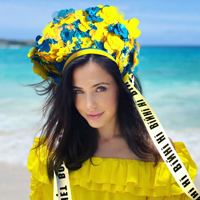
Leila Ismailova: One of the main reasons I fell in love with digital fashion is its creative liberation on an unprecedented level. At Artisant, we take conscious steps to liberate digital fashion and make it as accessible as possible by offering educational materials for designers to help them create using new software, mint their art, and even give away scholarships.
Leila Ismailova, Head of Curated Drops for ARTISANT
We chose to make Artisant open for minting, which means that designers from any part of the world can present their art to the community, express themselves, and make money.
We keep collecting inspirational stories of designers from small traditional towns where they wouldn’t have had a shot in the fashion industry if it weren’t for digital fashion.
One of the most beautiful ones is the story of Digital Mary, a Ukrainian designer who chose to stay with her husband during the war. She created and minted several designs while hiding in a shelter during the bombardment. Mary offered the designer the opportunity to create and share her art with the world and raise much-needed funds to support people around her, which saved her in the darkest days of her life.
Stories like these show how much light digital fashion brings to the world and how it can liberate artists.
Jack Cameron: Absolutely! If you scan through OpenSea, some of the projects, from a creative standpoint, are extremely innovative. I think an important change in the creative industry is that creativity is not just about art anymore, but also about what art could yield.
Anyone creating an NFT project can ask themselves, ”What utility can I add?”, and this type of thinking adds creative technologists and strategists who would typically not be part of the creative process.
We at Luna constantly look at the newest NFT projects for inspiration, and it’s super interesting to learn what people figure out when they combine art and technology.
Cécile Tirard: As a crypto-artist over the last 3 last years, I have seen creative minds find freedom in that space, who were for the most part working in advertising agencies or the gaming industry.
Most of them had felt exploited, and as soon as they started to earn revenue from their art, they resigned very quickly from their jobs. More than just an increase in revenue, it is also a liberation from the excessive pressure of clients and greater recognition of creative jobs where they can earn nearly an equal stake or split when collaborating with other artists. The best example is Beeple, who used to design hit record music or movie covers and barely got paid initially, but is now selling his artworks for millions.
XR Today: What do you believe will happen to blockchain-based e-commerce in the near future? Do you see it increasing in popularity or evolving dramatically over the next few years?
Esteban Ordano: I definitely see it becoming more and more commonplace. In Q1 of this year, Decentraland’s marketplace saw $43.77 million USD in marketplace sales, of which 97.5 percent of the revenue goes to the artist. The remaining 2.5 percent goes to the Decentraland DAO’s treasury, which is then redistributed as community grants.
This is in contrast to new metaverse platforms like Meta which are taking nearly 50 percent of revenue from artists. We believe that the only real impediment to ‘mega’ growth here is if traditional companies continue to sit on the sidelines.
However, decentralized artists and developers will continue to create in this space, perhaps leading to a mini-renaissance of ‘what is art,’ and not the type of art that is delivered from mega brands.
Additionally, open access with smart contract-based interoperability allows gamer guilds and teams to collectively own items. Your group can own a bunch of items that are not used at all times, so maybe you can borrow one Mighty Axe +1 to use in a tournament, or decor your Avatar’s outfit of the day (OOTD) with a tiara that someone made available as a loaner for your in-group to use.
Leila Ismailova: As with any innovative product, blockchain-based e-commerce platforms will soon become popular among early adopters and mass audiences. There will be a lot of improvements on legal and state levels, and I expect to see a combination of physical and digital in the NFT space.
Especially when we talk about fashion, more and more brands will inevitably join the blockchain community to realise the vast market needed to tap into and the growing audience of the younger generations who spend more time online.
Web3 is more efficient, safe, and multi-functional and hence, I see it as a natural evolution that will gradually replace Web2.
In digital fashion, I see more and more traditional brands who choose to explore the world of blockchain. Many of them regard it as a marketing gimmick at this stage, but I am certain they will appreciate this technology more and more with every new project.
Jack Cameron: I think one truly innovative thing Web3 has created is seamless digital wallet

Jack Cameron, Co-Founder and COO for Luna Market Inc
integration. Instead of signing up with your email and having to create a password for every website, you can simply connect your wallet and that address acts as your virtual identity.
This will be integral for the eCommerce industry because it will allow platforms to make the purchasing process much easier for consumers. Many consumers get tired of having to enter credit card information when they enter new platforms but are equally afraid to store their passwords because they do not trust centralized organizations. This would be resolved with digital wallets, which make the process much simpler and safer.
Cécile Tirard: Regarding this, I truly believe that not much has happened yet as NFTs are not simply for creating digital assets, and we are realising more and more that, currently and in the future, the production and delivery of secondhand sales on the blockchain for a smooth experience and a better, more secure secondhand market.
In that domain, projects like Arianee have tagged objects using the blockchain, and even an early project from Kyrill Zlobenko has been tracked from order to production.
For luxury goods, it is essential the NFT acts like an authentication certificate to track supply chain sourcing and production processes with Just In Time (JIT) methodologies and secondhand market facilitation, which I find fascinating.
XR Today: How will NFTs, the blockchain merge with the developing Metaverse, and how do you see the technologies combining to create an interoperable, monetised economy?
Esteban Ordano: Whatever the ‘Metaverse’ means to you, public blockchains are an essential technology in the process of claiming back the data out of big centralized silos. The virtual items you buy follow rules that can’t be changed unilaterally by the issuing company. Or maybe they can!
But since those rules are programmatic, automatically enforced, and publicly available, they are not arbitrarily bound to the operating company’s whims or enforced by a painfully slow judiciary process, hidden in terms of use written in legalese that might be inaccurate.
This transparency will foster more economic activity because it lowers the frictions and the trust needed to place in the platform or game that set up the experience.
We are also seeing a new rise of communities from NFT projects that are finding each other on Discord and other community platforms. Groups that currently gather in online forms find in Decentraland a space to gather. We are seeing in real-time a natural continuation of NFT communities finding their way to the Metaverse to meet in 3D environments and showcase their NFTs in the virtual world.
Leila Ismailova: Recently, Artisant created an upcycled wedding collection with Puma for Decentraland Fashion Week. We have also integrated wearables on avatars and are about to drop a collaboration with Pixelord and avatar company Ready Player Me.
In the case of digital fashion, interoperability becomes a familiar experience that we borrow from the real world. The same way our bodies need clothes in the physical realm, our avatars need them in Metaverse. Artisant focuses on technological solutions that will make the transition of digital garments in the Metaverse seamless.
The ecosystem develops fast, and what I really like about this is the aspiration of each crypto project to bring as much value as possible to its token holders. Of course today, NFTs are not just an item.
It comes with benefits for the token-holders, and in the case of fashion brands, it could be an invitation to a fashion show, discounts, access to private events, Discord channels, and many other benefits.
Jack Cameron: NFTs and blockchain technology are simply just agreed-upon technology for anyone to build on, which allows the goal of creating an open Metaverse possible.
We at Luna think that a Metaverse cannot exist without the connection of all developing Metaverses. The assets and digital products created from different Metaverses must flow from one space to another with ease for interoperability to be true.
Therefore, we believe brands are very crucial in making interoperability real, and they have a proven loyal community that can be leveraged to different Metaverses in exchange for their cooperation.
For a brand, interoperability equals reach, and if you’re a brand or a creator, you want your project or product to be seen by consumers who will highly engage, and the Web3 community is much more invested than average consumers. So once these rails are built, we will be able to take digital products from one space to another.
Cécile Tirard: NFTs are a permanent proof of ownership in the Metaverse, and this is essential. People are now ready to spend a fortune on virtual land because blockchain technologies track the ownership.
Personally, I think it’s the difference between renting and owning a home. If the Metaverse is not NFT-powered, you will lose everything the day the Metaverse closes.
Now, if your Metaverse is backed by NFTs and the blockchain like CrytpoVoxel, Decentraland, or even The Sandbox, then no matter what happens, you will always own your land, buildings, and other digital assets thanks to the decentralisation inherent to the blockchain. In the future world of NFTs, you will even be able to divide your land and rent to others, giving rise to a new global economy.