


People interact with open-source applications like MetaMask, Web3 games, the metaverse and DeFi protocols every day but don’t often stop to think about what happens in the background for it all to work. If we think of Web3 as a burgeoning new city, node infrastructure providers are the underlying power grid that makes operations possible.
All DApps need to communicate with blockchains, and full nodes serve billions of requests from DApps to read and write data to chains every day. We need a huge node infrastructure to keep up with vastly expanding DApp ecosystems and serve all of the requests. However, running nodes is very time and capital intensive, so DApp builders turn to providers for remote access to nodes. There is a massive monetary incentive for infrastructure providers to power as many of these Web3 ecosystems as possible, but who is winning this race so far?

The centralization problem
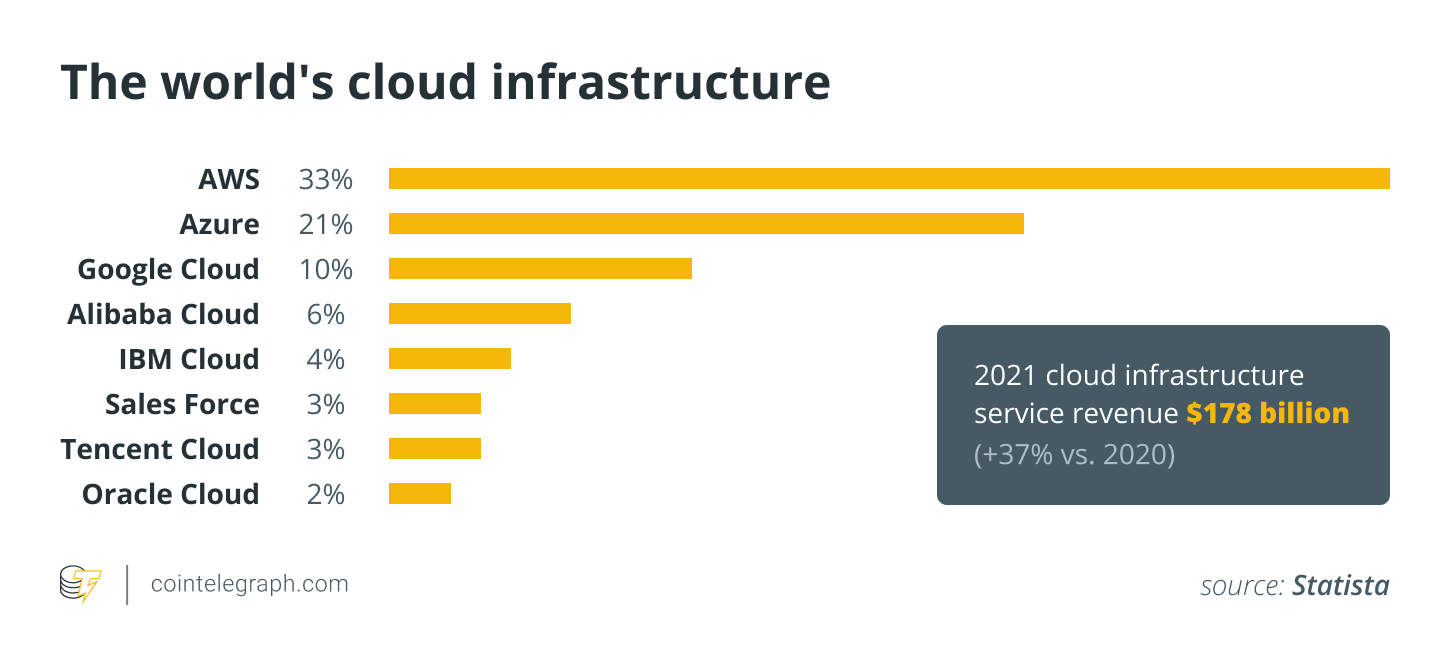
The fastest way to provide reliable infrastructure to power DApp ecosystems is for centralized companies to set up a fleet of blockchain nodes, commonly housed in Amazon Web Services (AWS) data centers, and allow developers to access it from anywhere for a subscription. That is exactly what a few players in the space did, but it came at the price of centralization. This is a major issue for the Web3 economy, as it leaves the ecosystem vulnerable to attacks and at the mercy of a few powerful players.
Consider that over 80% of Ethereum nodes are located in the United States and Germany, and that the three largest mining pools could come together to 51% attack the network. In many ways, today’s blockchains are a lot more centralized than we’d like them to be, in stark contrast to the ethos originally set out in Satoshi Nakamoto’s Bitcoin (BTC) white paper.
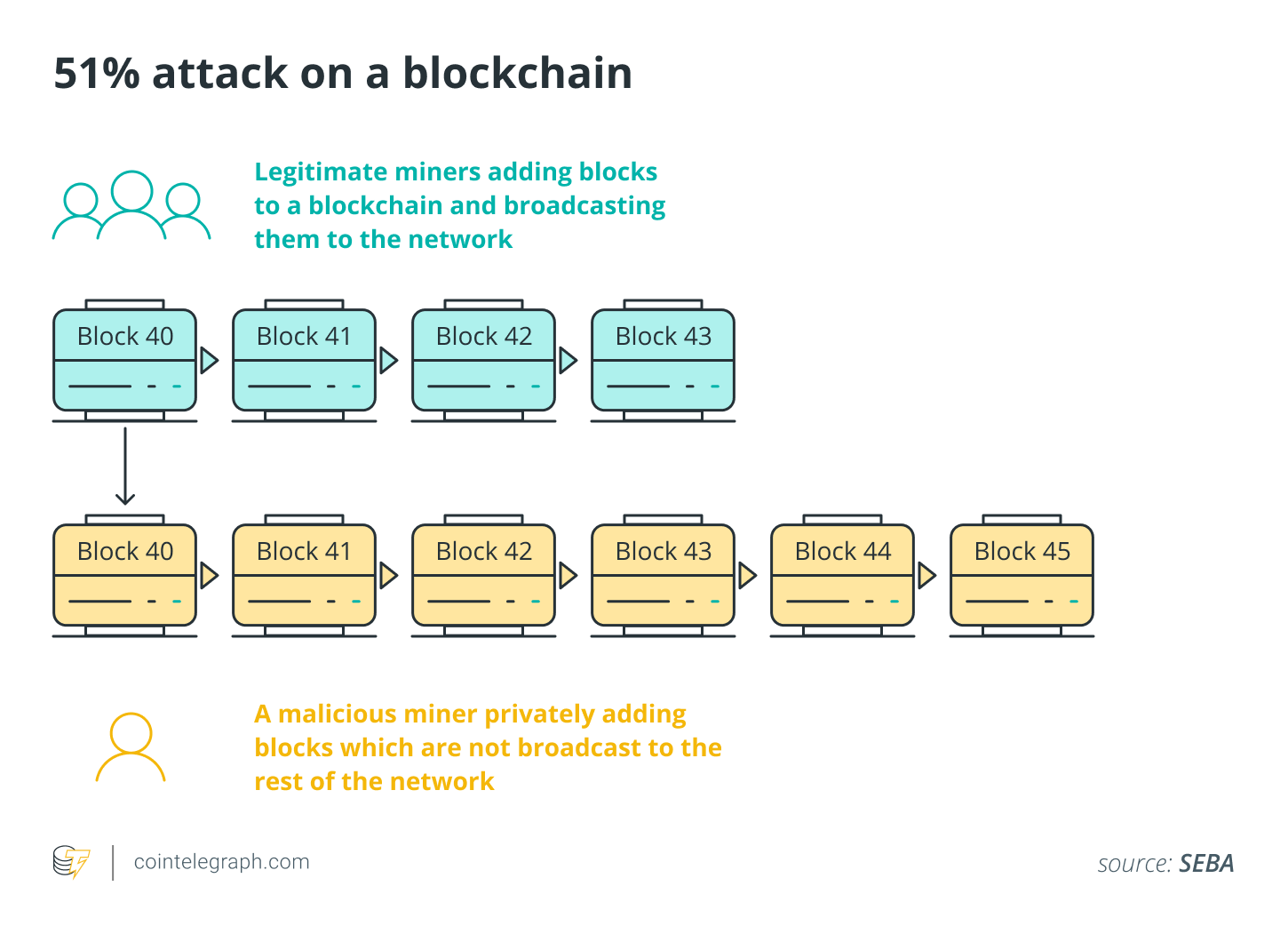
If large node providers collude, Web3 would lose all the advantages it has over Web2, from censorship-resistance to trustworthiness, and be stuck with only its disadvantages, from relatively high fees to low transactional throughput.
Not only that, but reliance on centralized providers also leaves the door open to outages. For example, an Infura outage actually forced crypto exchanges and wallets, like Coinbase Wallet, Binance and MetaMask, to suspend Ethereum and ERC-20 token withdrawals, since they couldn’t fully rely on their nodes.
It’s also worth noting that Amazon, which is the backbone of many of these centralized providers, has suffered a number of outages in the past, creating another layer of vulnerability. Ethereum’s Infura outage isn’t the only one. More recently, Ethereum’s move to Ethereum 2.0 was set back with a 7-hour outage due to the hardware failure of a single node on the network. This is a risk that truly decentralized networks don’t have to worry about.
Decentralization is a key tenet of the Web3 economy, and centralized blockchain infrastructure threatens to undermine it. For instance, Solana has suffered multiple outages due to a lack of sufficient, decentralized nodes that could handle spiking traffic. This is a common problem for blockchain protocols that are trying to scale.
Related: Scalability or stability? Solana network outages show work still needed
And it’s not just Solana. Many of the top blockchain protocols are struggling to find a way to scale and become more decentralized. In fact, while large blockchains like Ethereum and Bitcoin have remained steadfast in the war for decentralization, smaller blockchains have lost the battle, suffering 51% attacks at the hand of overly-centralized node providers.
For instance, on June 8, 2013, Feathercoin (FTC) suffered a 51% attack. This means that a single entity was able to control more than half of the total processing power of the FTC network. This allowed them to reverse confirmed transactions and even halt new transactions from going through.
At the same time as the FTC attack, the website suffered a DDoS attack. This made it difficult for users to access information about the attack or to try and get their money out of the network. Since then, FTC has fallen into obscurity. Its price has plummeted and it is no longer listed on any major exchanges.
This historical centralization owes to the over-reliance on Web2 cloud providers, like AWS and Infura, which have been the primary providers of infrastructure for the Web3 economy so far. But now, to avoid centralization and blockchain’s proverbial “single point of failure,” decentralized infrastructure providers are gaining a great deal of steam. This is good news for the prospect of Web3 ecosystems remaining healthy and decentralized.
Decentralized infrastructure provides better solutions
Thankfully, recent innovations are giving rise to a new breed of provider that is much more decentralized. These providers run nodes on-premises, or even in users’ homes, rather than relying on centralized cloud providers.
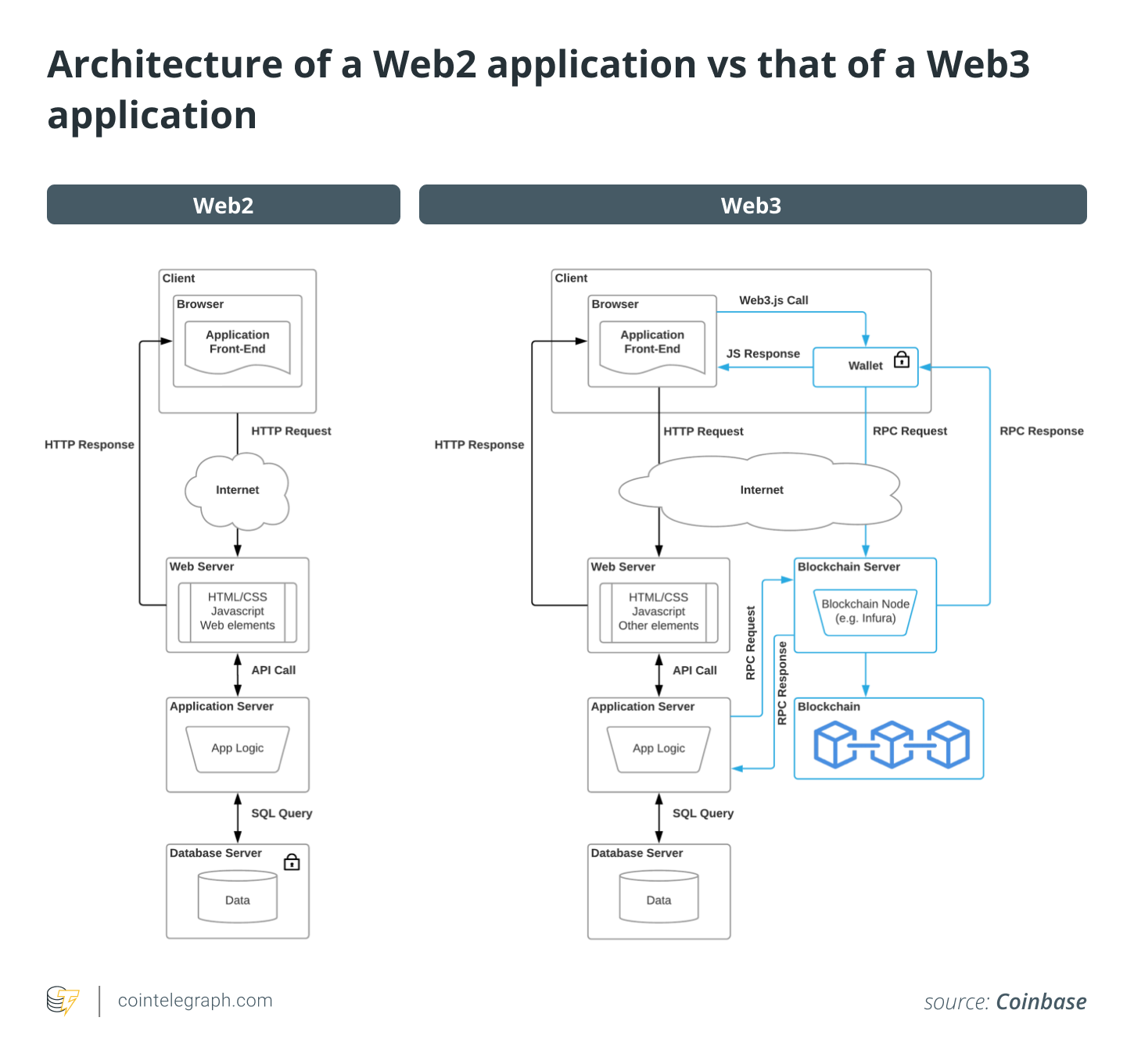
While centralized providers have a head start, decentralized providers are emerging as an extremely viable alternative. Their key advantage is that they can’t be taken down by a single point of failure, and in many cases provide faster connections to global users. Also, decentralized node infrastructure providers create new economies where independent providers serve requests for data and earn rewards in their native tokens. This new type of provider is quickly gaining market share, and may even eventually supplant the current incumbents of Web3 infrastructure.
Related: Decentralization, DAOs and the current Web3 concerns
Competition is heating up
There are a number of different providers in the space, such as Ankr, Flux and QuickNode, that are competing for market share. This competitive environment is good for the Web3 economy, as it leads to innovation and drives down prices. It also ensures that providers are constantly striving to improve their services and provide the best possible experience to their customers.
Even more importantly, decentralized infrastructure competition results in greater decentralization of the Web3 economy. This is a good thing, as it makes the economy more resilient against attacks and censorship. The 51% attacks of the past should stay in the past, with infrastructure providers spread out among different geographies.
Related: Web3 relies on participatory economics, and that is what is missing — Participation
This competition among providers will be vital to maintaining a healthy and decentralized ecosystem.
Realizing the promise of Web3
The promise of Web3 isn’t just to build a better internet, but to build a better world. Decentralized infrastructure providers are building the foundation for a new internet, one that is more equitable, secure and censorship-resistant.
By maintaining the status quo, centralized hosting providers fail to provide true innovation and are susceptible to censorship. Decentralized infrastructure providers, on the other hand, are incentivized to push the envelope and provide the best possible service with a democratic structure, which ensures that they are more resistant to censorship and attacks.
This article does not contain investment advice or recommendations. Every investment and trading move involves risk, and readers should conduct their own research when making a decision.
The views, thoughts and opinions expressed here are the author’s alone and do not necessarily reflect or represent the views and opinions of Cointelegraph.
Gregory Gopman is a tech entrepreneur working in the blockchain space, where he serves as chief marketing officer at Ankr, and runs a blockchain consultancy called Mewn that helps launch projects and grow their valuation. Greg has worked in startups for 15 years — 10 years with Silicon Valley tech companies, and 5 years building crypto projects. He’s best known for co-founding the Akash Network and AngelHack, and helping Kadena grow from $80 million to over $4 billion in 100 days.