

Metaverse Attributes
We’ve mentioned that a set definition of the metaverse is yet to be agreed on, but there are a few characteristics that will be common to all virtual worlds. Famed venture capitalist Matthew Ball, who was among the first to predict the rise of the metaverse, defines it as a “massively scaled and interoperable network of real-time rendered 3D virtual worlds which can be experienced synchronously and persistently by an effectively unlimited number of users with an individual sense of presence, and with continuity of data, such as identity, history, entitlements, objects, communications, and payments.” Here’s a closer look at some of those metaverse characteristics:
Persistent and synchronous – Much like “real life,” the metaverse will be a synchronous living experience for its users. All activities you have inside a virtual world will exist and change in real-time. There’s also no way to ‘pause’, ‘unplug’ or ‘reset’ a virtual world, making it a continuous experience.
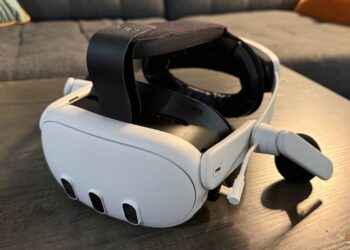
Immersive – Whether you’re using a virtual reality headset, AR glasses or just your smartphone, you’ll be able to enter a new level of immersion and interactivity in the metaverse, where users can feel both an individual and social sense of presence. Thanks to AI, a virtual world will also feature adaptive capabilities letting environments be shaped by interactions with its users.
Decentralized – The metaverse won’t be owned by a single individual or entity but by all of its users. This is made possible in part due to the contribution of blockchain technology.
Interoperable – Ideally, one day users will be able to navigate across different virtual worlds, experiences and transactions as if they were all part of a single platform. For that, metaverse users will only have to have a single digital wallet or avatar, for example, which can be used for all activities inside the metaverse.
Functional economy – Users can enter a free and secure metaverse marketplace where digital assets can be exchanged for fair value. Usually, assets in the metaverse are NFTs (non-fungible tokens) that can be traded in return for a cryptocurrency. This allows users to have full ownership of their digital assets, trace their provenance and transaction history, as well as certifying the authenticity and uniqueness of such items.
Accessible – Shared virtual worlds bring the promise of democratizing access to digital goods and experiences from anywhere and to anyone in the world. All you need is an interface, like a smartphone or a virtual reality headset.
The vision of the metaverse is slowly taking off, paving the way for profound changes across various experiences and environments – some of them already available and others yet to emerge.